Categories
Blog Updates

Appealable Orders Under GST – Meaning | Nature | Types

Appealable Orders Under GST

An appealable order under GST refers to any decision, direction, or order passed by a GST authority that gives rise to a legal grievance for a taxpayer or the department and can therefore be challenged before a higher authority as permitted under the GST law. In essence, any order that impacts a person’s rights, liabilities, or interests under GST and is passed under Section 107 or 108 is considered an appealable order.

Table of Contents

  1. Nature of Appealable Orders
  2. Remand Orders
  3. Orders Enhancing Liabilities
  4. Revisional Orders
  5. Non-Judicial Orders
  6. Letters Can be Appealable Orders
  7. Meaning of Aggrieved Person
Check out Taxmann's GST Appellate Tribunal – Law & Practice | A Comprehensive Guide which is a definitive, practitioner-oriented handbook on the GST Appellate Tribunal (GSTAT), blending doctrinal clarity with practical litigation strategy. It traces the full journey of GST appeals—from constitutional foundations and tribunal architecture to nuanced procedural requirements, jurisdictional principles, and representation techniques. Supported by insights from 200+ landmark judgments, the book bridges the gap between GST legislation and real-world appellate practice. Organised across four thematic parts with extensive appendices, the 2026 Edition authored by Advocate (CA.) Abhay Desai stands as the first comprehensive publication on GSTAT by AIFTP. It is an essential resource for tax professionals, industry practitioners, litigants, researchers, and government officials involved in GST disputes.

1. Nature of Appealable Orders

The right of appeal is a statutory right. It is a substantive right and hence cannot be defeated on procedural infirmities. Sec. 112(1) of the CGST Act, 2017 provides that any person aggrieved by an order passed against him under section 107 or section 108 of the CGST Act or the SGST Act or the UTGST Act may appeal to the Appellate Tribunal against such order. Sec. 107 provides for the order of the first appellate authority, and Sec. 108 provides for the order of the revisional authority.

Sec. 112(1) uses the expression ‘order’. The said word has not been defined in the Act. Hence, the meaning of the said word will have to be determined in the context of Sec. 107 & Sec. 108 of the Act.

Sec. 107(11) of the CGST Act, 2017 grants power to the first appellate authority after making such further inquiry as may be necessary, pass such order, as it thinks just and proper, confirming, modifying or annulling the decision or order appealed against but shall not refer the case back to the adjudicating authority that passed the said decision or order. Hence, the right of appeal u/s 112(1) shall be available against any order passed by the first appellate authority.

Taxmann's GST Appellate Tribunal – Law & Practice | A Comprehensive Guide Appealable Orders Under GST

2. Remand Orders

The issue arises as to whether the right of appeal u/s 112(1) of the CGST Act, 2017, is available against the order of the first appellate authority remanding the matter back to the adjudicating authority. The issue arises because, as stated earlier, Sec. 107(11) of the CGST Act, 2017 expressly does not permit the first appellate authority to refer the case back to the adjudicating authority. Since Sec. 112(1) of the CGST Act, 2017 grants a right of appeal against any order passed u/s 107 without distinguishing as to whether such order has been in excess of jurisdiction, the aggrieved person shall have a right to appeal even against such remand orders.

3. Orders Enhancing Liabilities

First proviso to Sec. 107(11) of the CGST Act, 2017 provides that the first appellate authority can pass an order enhancing any fee or penalty or fine in lieu of confiscation or confiscating goods of greater value or reducing the amount of refund or input tax credit provided that the appellant has been given a reasonable opportunity of showing cause against the proposed order. The second proviso further provides that where the Appellate Authority is of the opinion that any tax has not been paid or short-paid or erroneously refunded, or where input tax credit has been wrongly availed or utilised, no order requiring the appellant to pay such tax or input tax credit shall be passed unless the appellant is given notice to show cause against the proposed order and the order is passed within the time limit specified under section 73 or section 74 or section 74A. Since Sec. 112(1) of the CGST Act, 2017 provides for a right of appeal against any order passed u/s 107, the aggrieved person shall have a right of appeal even against the order passed by the first appellate authority enhancing the liabilities.

4. Revisional Orders

Sec. 108(1) of the CGST Act, 2017 grants power to the revisional authority to pass an order as he thinks just and proper, including enhancing or modifying or annulling the said decision or order if the authority finds that the original order is erroneous insofar as it is prejudicial to the interest of revenue and is illegal or improper or has not taken into account certain material facts, whether available at the time of issuance of the said order or not or in consequence of an observation by the Comptroller and Auditor General of India subject to the restrictions and limitations provided u/s 108. Sec. 112(1) of the CGST Act, 2017, therefore, confers the right of appeal against such revision orders.

Sec. 112(3) of the CGST Act, 2017 grants the right to file an application (departmental appeal) against the order passed by the Appellate Authority or the Revisional Authority. Hence, the right of appeal has also been granted to the Revenue against the order passed u/s 107(11) or Sec. 108(1) of the CGST Act, 2017.

5. Non-Judicial Orders

Hon’ble Supreme Court in Jaswant Sugar Mills Ltd. v. Lakshmi Chand 1962 SCC OnLine SC 20 held that to make a decision or an act judicial, the following criteria must be satisfied:

  • it is in substance a determination upon investigation of a question by the application objective standards to facts found in the light of pre-existing legal rules;
  • it declares rights or imposes upon parties obligations affecting their civil rights; and
  • that the investigation is subject to certain procedural attributes contemplating an opportunity of presenting its case to a party, ascertainment of facts by means of evidence if a dispute be on questions of fact, and if the dispute be on question of law on the presentation of legal argument, and a decision resulting in the disposal of the matter on findings based upon those questions of law and fact.

Hon’ble Supreme Court in Union of India v. Tarachand Gupta & Bros. 1983 (13) E.L.T. 1456 (S.C.) held that a civil suit will lie if the Collector acts in excess of jurisdiction. It was held that the provision excluding the jurisdiction of civil Courts cannot apply to cases where the provisions of the particular statute have not been complied with or the tribunal has not acted in conformity with the fundamental principles of judicial procedure and a determination by a tribunal of a question other than the one which the statute directs it to decide and hence such orders are a nullity in law.

Therefore, the orders contrary to the principles of natural justice, in devoid of jurisdiction or excess of jurisdiction, can be said to contravene Article 14 as well as Article 265. Legally, they cannot be considered to be ‘orders’ in accordance with the law. One may refer to the discussion with respect to writ remedies. Hence, such orders can be challenged under Article 226.

6. Letters Can be Appealable Orders

Hon’ble Karnataka High Court in Chief Commissioner, LTU, Bangalore v. TNT India Pvt. Ltd. 2010 (19) S.T.R. 5 (Kar.) in the context of whether a letter issued by Commissioner of service tax indicating the liability to pay service tax can be considered as an “order” and hence appealable, held that any communication purportedly determining liability in exercise of the powers under the law can be considered as an ‘order’ and hence appeal against such communication is maintainable.

In the present context, since Sec. 112(1) of the CGST Act, 2017, inter alia, grants jurisdiction to GSTAT against the orders passed by the first appellate authority, one has to consider whether the determination of liability made by way of letter appears to be in exercise of powers u/s 73 or 74 or 74A of the CGST Act, 2017 and if the same are found to be appealable, then against the order of the first appellate authority, second appeal shall lie before the GSTAT.

Sec. 112(1) of the CGST Act, 2017 provides that any person aggrieved by an order passed against him under section 107 or section 108 of the CGST Act or the SGST Act, or the UTGST Act may appeal to the Appellate Tribunal against such order. Hence, the right of appeal has been vested with the person who is aggrieved by an order passed against him.

7. Meaning of Aggrieved Person

Black’s Law Dictionary (4th Edition) defines the expression ‘aggrieved’ as having suffered loss or injury; damnified; injured. The expression “AGGRIEVED PARTY” has been defined as one whose legal right is invaded by an act complained of, or whose pecuniary interest is directly affected by a decree or judgment.

Hon’ble Supreme Court in Mani Subrat Jain etc. v. State of Haryana (1977) 1 SCC 486 held that a person can be said to be aggrieved only when a person is denied a legal right by someone who has a legal duty to do something or to abstain from doing something. P Ramanatha Aiyar’s Advanced Law Lexicon (5th Edition) defines the expression “Aggrieved party” as the persons whose rights are adversely affected by a judgment, decree, or order. A person whose legal rights have been affected, injured, or damaged in a legal sense.

Hon’ble Supreme Court in Nalakath Sainuddin v. Koorikandan Sulaiman (2002) 6 SCC 1 held that the aggrieved party means a person feeling aggrieved by the ultimate decision, that is, the operative part of the order. Hon’ble Supreme Court in A. Subash Babu v. State of A.P. (2011) 7 SCC 616 held that the expression ‘aggrieved person’ denotes an elastic and elusive concept. It cannot be confined within the bounds of a rigid, exact, and comprehensive definition. Its scope and meaning depend on diverse, variable factors such as the content and intent of the statute of which the contravention is alleged, the specific performances of the case, the nature and extent of the complainant’s interest, and the nature and extent of the prejudice or injury suffered by the complainant.

Constitution Bench of the Hon’ble Supreme Court in Adi Pherozshah Gandhi v. H.M. Seervai, Advocate General of Maharashtra, Bombay [1970 (2) SCC 484], in the context of who can be considered as ‘person aggrieved’, held as under:

“Generally speaking, a person can be said to be aggrieved by an order which is to his detriment, pecuniary or otherwise or causes him some prejudice in some form or other. A person who is not a party to a litigation has no right to appeal merely because the judgment or order contains some adverse remarks against him. But it has been held in a number of cases that a person who is not a party to a suit may prefer an appeal with the leave of the appellate court and such leave would not be refused where the judgment would be binding on him under Explanation 6 to Section 11 of the Code of civil procedure. We find ourselves unable to take the view that because a person has been given notice of some proceedings wherein he is given a right to appear and make his submissions, he should without more have a right of appeal from an order rejecting his contentions or submissions. An appeal is a creature of statute and if a statute expressly gives a person a right to appeal, the matter rests there.”

Hon’ble Supreme Court in Jasbhai Motibhai Desai v. Roshan Kumar Haji Bashir Ahmed [(1976) 1 SCC 671] held as under:

“Thus, in substance, the appellant’s stand is that the setting up of a rival cinema house in the town will adversely affect his monopolistic commercial interest, causing pecuniary harm and loss of business from competition. Such harm or loss is not wrongful in the eye of law, because it does not result in injury to a legal right or a legally protected interest, the business competition causing it being a lawful activity. Juridically, harm of this description is called damnum sine injuria, the term injuria being here used in its true sense of an act contrary to law [Salmond on Jurisprudence, 12th Edn. by Fitzgerald, p. 357, para 85]. The reason why the law suffers a person knowingly to inflict harm of this description on another, without holding him accountable for it, is that such harm done to an individual is a gain to society at large.”

Hon’ble Supreme Court in Northern Plastics Ltd. v. Hindustan Photo Films Mfg. Co. Ltd. 1997 (91) E.L.T. 502 (S.C.) held that ‘person aggrieved’ includes only such persons who have a direct legal interest in the concerned matter. The Hon’ble Court held as under:

“10. ………. It is true that the phrase ‘person aggrieved’ is wider than the phrase ‘party aggrieved’. But in the entire context of the statutory scheme especially sub-section (3) of Section 129A it has to be held that only the parties to the proceedings before the adjudicating authority Collector of Customs could prefer such an appeal to the CEGAT and the adjudicating authority under Section 122 can prefer such an appeal only when directed by the Board under Section 129D(1) and not otherwise. It is easy to visualise that even a third party may get legitimately aggrieved by the order of the Collector of Customs being the adjudicating authority if it is contended by such a third party that the goods imported really belonged to it and not to the purported importer or that he had financed the same and, therefore, in substance he was interested in the goods and consequently the release order in favour of the purported importer was prone to create a legal injury to such a third party which is not actually arraigned as a party before the adjudicating authority and was not heard by it. Under such circumstances such a third party might perhaps be treated to be legally aggrieved by the order of the Collector of Customs as an adjudicating authority and may legitimately prefer an appeal to the CEGAT as a ‘person aggrieved’. That is the reason why the Legislature in its wisdom has used the phrase ‘any person aggrieved’ by the order of Collector of Customs as adjudicating authority in Section 129A(1). But in order to earn a locus standi as ‘person aggrieved’ other than the arraigned party before the Collector of Customs as an adjudicating authority it must be shown that such a person aggrieved being third party has a direct legal interest in the goods involved in the adjudication process. It cannot be a general public interest or interest of a business rival as is being projected by the contesting respondents before us.”

Hon’ble Supreme Court in U.P.S.R.T.C. v. Commissioner of C. Ex. & Service Tax 2011 (21) S.T.R. 357 (S.C.) held that since no notice was issued by the respondents to the appellant demanding payment of service tax from it and according to the respondents, the liability to pay such service tax under the provisions of Section 65 of the Finance Act is that of the private bus operators and not the appellant, it was held that only the private bus operators can be considered as persons aggrieved and hence the appellant who had merely received a communication from the respondents requesting to supply the list of contractual assignment entered into between the private parties who have offered their buses on rent basis to the appellant, cannot have the right to challenge such communication.

Hon’ble Karnataka High Court in Gepach International v. Commissioner of C. Ex 2011 (267) E.L.T. 591 (Kar.) held that a Merchant-exporter who executed a bond undertaking to pay the duty on non-completion of export obligation cannot have the right of appeal when the appellant is not the person who is liable to pay excise duty. Only the manufacturer, who is liable in law to pay the duty, has a right of appeal.

Hon’ble Bombay High Court in Usha B. Agarwal v. Commissioner of Central Excise, Mumbai-VII 2009 (243) E.L.T. 492 (Bom.) held that appellant who had purchased goods on which earlier it was assumed that no excise duty was payable and had given a Bank guarantee to the effect that in event the excise duty demanded, he will reimburse the same to the supplier viz. O.N.G.C. held that the appellant can be said to be a person aggrieved as prejudice has been occasioned to him by O.N.G.C. in not preferring an appeal, and the appellant having to pay excise duty, which, in his opinion, is not payable.

Hon’ble Calcutta High Court in the case of Mehndihasan Rahemtulla Hariyani v. Deputy Commission of Revenue (2023) 2 Centax 270 (Cal.)/[2023] 146 taxmann.com 430 (Cal.) held that even though the adjudication proceeding u/s 129 of the CGST Act, 2017 (relating to the E-way bill infractions) was initiated and passed against the driver/in-charge of the vehicle in question, the petitioner’s concern being the consignee of the goods, had a reason to be aggrieved by the said order of the adjudicating authority and hence has a right of appeal.

The aforesaid discussion reveals that the person can be said to be aggrieved when the legal right of said person has been vitiated or the respondent authority has failed to perform the legal duty, and the same has caused prejudice or damage or injury, or pecuniary liability on the said person in the context of the given Statute.

Now, in the context of GST, Sec. 112(1) of the CGST Act, 2017 vests the right of appeal in the person who is aggrieved by an order passed against him under Section 107 or Section 108 of the CGST Act. Hence, the person who is aggrieved against the order passed against him by the first appellate authority (Sec. 107) or the revisional authority (Sec. 108) will have the right of appeal. The said person can be aggrieved with any of the findings of the given orders. Hence, it is not necessary that the findings must result in the tax liability. The person can also be aggrieved due to the findings, such as non-consideration of evidence, non-consideration of legal grounds, date of service of the adjudication order resulting in wrongful dismissal of the appeal on limitations, manner of determination of quantum of pre-deposit, manner of payment of a pre-deposit, etc. The scope of right of appeal u/s 112(1) of the CGST Act, 2017 is very wide. However, an alien to the proceedings whose legal right is not affected in any way by the passing of an order u/s 107 or 108 cannot be considered as an aggrieved party.

The post Appealable Orders Under GST – Meaning | Nature | Types appeared first on Taxmann Blog.
source

Categories
Blog Updates

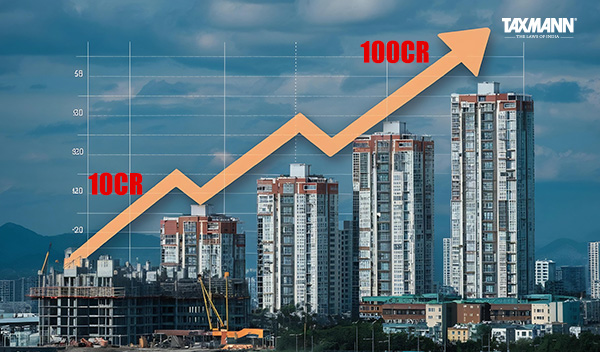
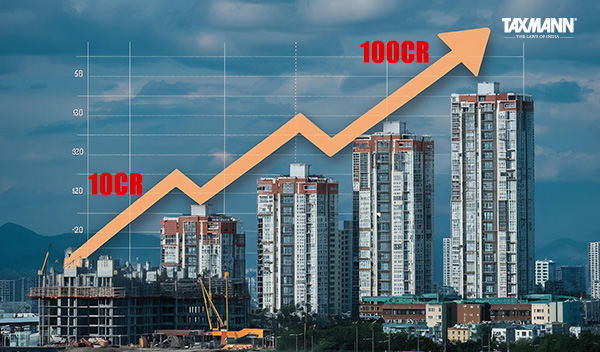
MCA Raises Small Company Thresholds to Rs. 10 Cr Capital and Rs. 100 Cr Turnover

MCA small company threshold

Notification No. G.S.R. 880(E); Dated: 01.12.2025

The Ministry of Corporate Affairs (MCA) has issued the Companies (Specification of Definition Details) Amendment Rules, 2025, significantly revising the financial criteria used to classify a company as a small company under the Companies Act, 2013. These amendments aim to ease compliance requirements for a larger segment of businesses and promote ease of doing business.

1. Revised Financial Thresholds

Under the amended rules, the following limits have been enhanced:

1.1 Paid-up Capital

  • Earlier limit  ₹4 crore
  • Revised limit  ₹10 crore

1.2 Turnover (Based on the Previous Financial Year)

  • Earlier limit  ₹40 crore
  • Revised limit ₹100 crore

These revised thresholds will now apply for determining a small company under Section 2(85) of the Companies Act, 2013.

2. Purpose of the Amendment

The enhancement of thresholds is intended to:

  • Bring more companies under the “small company” category
  • Reduce compliance burden for eligible companies
  • Enable simplified governance, lower filing requirements, and reduced penalties
  • Support the government’s broader objective of improving the business environment and encouraging growth of MSMEs

3. Effective Date

The revised thresholds will come into effect from 01 December 2025.

All companies meeting the updated criteria on or after this date will qualify as small companies for statutory and compliance purposes.

Click Here To Read The Full Notification

The post MCA Raises Small Company Thresholds to Rs. 10 Cr Capital and Rs. 100 Cr Turnover appeared first on Taxmann Blog.

source

Categories
Blog Updates

Cross-LoC Barter in J&K Taxable as Intra-State Supply | HC

cross-LoC barter

Case Details: New Gee Enn & Sons vs. Union of India - [2025] 181 taxmann.com 1

Judiciary and Counsel Details

  • Sanjeev Kumar & Sanjay Parihar, JJ.
  • S.F. Qadiri, Sr. Adv., Numan ZargarMs Snober SameerSikander Hayat Khan, Advs. for the Petitioner.
  • Tahir Majid Shamsi, DSGI, Ms Rehana Qayoom, Adv., Waseem Gul, GA, Mohd Younus HafizMs Nowhabar Khan, ACs for the Respondent.

Facts of the Case

The petitioners, engaged in cross-LoC barter trade, contended that such transactions were treated as zero-rated under the pre-GST J&K VAT regime and therefore continued to be non-taxable under GST. It was submitted that these barter transactions did not involve currency exchange and were not in the nature of import or export. It was argued that the notices issued were time-barred and invalid as they were composite for multiple years. They also urged that the writ petitions were maintainable and that the jurisdictional officer was not justified in invoking suppression or fraud. The matter was accordingly placed before the High Court.

High Court Held

The High Court held that cross-LoC barter transactions constituted intra-State supplies because both the location of the supplier and the place of supply lay within the territories of the erstwhile State of Jammu &Kashmir, including areas under the de facto control of Pakistan, and were therefore amenable to GST levy under section 8 read with section 7 of the IGST Act. The Court held that the show cause notices were referable to section 74(1) of the CGST Act as their contents indicated prima facie suppression, non-disclosure of outward and inward supplies, non-cooperation during inquiry, and awareness that no exemption notification applied.

List of Cases Referred to

The post Cross-LoC Barter in J&K Taxable as Intra-State Supply | HC appeared first on Taxmann Blog.

source

Categories
Blog Updates

Ind AS 23 | Accounting Treatment for Interest on Project-Specific Loans and Adjustment of Investment Income

borrowing cost capitalisation

1. Facts

Metro Link Infrastructure Limited, hereinafter referred to as “the Company,” is engaged in the business of development and construction of a metro rail network. The project is fully funded by the Government of India (GoI) through interest-free subordinate debt specifically earmarked for project execution.

During the year, the Company received substantial subordinate debt from the Government to meet capital expenditure requirements of the metro system, which is currently under construction. The Company applies the principles of Ind AS 109, Financial Instruments, for financial reporting purposes. Accordingly, the subordinate debt is measured at fair value on initial recognition, and the difference between the amount received and the fair value is treated as a government grant. Further, for subsequent measurement, the company applies the Effective Interest Rate (EIR) method, resulting in recognition of a notional interest expense over the tenure of the debt.

As per the company’s accounting policy, the borrowing costs that are directly attributable to the construction of a qualifying asset are capitalised in accordance with Ind AS 23, Borrowing Costs. Therefore, the interest expense arising from fair valuation of the subordinate debt determined under the effective interest method has been charged to Capital Work-in-Progress (CWIP), as it relates specifically to the ongoing construction of the metro infrastructure.

Furthermore, the Company has temporarily deployed a portion of the unutilised subordinate debt proceeds in short-term investments. The investments generated interest income, which the Company has recognised in the Statement of Profit and Loss considering it as an incidental income earned during the construction phase.

State whether the accounting treatment for interest on subordinate debt is appropriate. Further, analyse whether the interest income earned from temporary deployment of project specific subordinate debt funds should be adjusted against the cost of the qualifying asset or should continue to be recognised in profit or loss?

2. Relevant Provision

Ind AS 109 – Financial Instruments

Para 4.2.1 of Ind AS 109

An entity shall classify all financial liabilities as subsequently measured at amortised cost, except for:

(a) financial liabilities at fair value through profit or loss.

(b) financial liabilities that arise when a transfer of a financial asset does not qualify for derecognition or when the continuing involvement approach applies.

(c) financial guarantee contracts …………….

Amortised cost of a financial asset or financial liability

The amount at which the financial asset or financial liability is measured at initial recognition minus the principal repayments, plus or minus the cumulative amortisation using the effective interest method of any difference between that initial amount and the maturity amount and, for financial assets, adjusted for any loss allowance.

Effective Interest Method

The method that is used in the calculation of the amortised cost of a financial asset or a financial liability and in the allocation and recognition of the interest revenue or interest expense in profit or loss over the relevant period.

Effective Interest Rate

The rate that exactly discounts estimated future cash payments or receipts through the expected life of the financial asset or financial liability to the gross carrying amount of a financial asset or to the amortised cost of a financial liability.

Ind AS 23 – Borrowing Costs

Para 8 of Ind AS 23

An entity shall capitalise borrowing costs that are directly attributable to the acquisition, construction or production of a qualifying asset as part of the cost of that asset. An entity shall recognise other borrowing costs as an expense in the period in which it incurs them.

Para 12 of Ind AS 23

To the extent that an entity borrows funds specifically for the purpose of obtaining a qualifying asset, the entity shall determine the amount of borrowing costs eligible for capitalisation as the actual borrowing costs incurred on that borrowing during the period less any investment income on the temporary investment of those borrowings.

Para 13 of Ind AS 23

The financing arrangements for a qualifying asset may result in an entity obtaining borrowed funds and incurring associated borrowing costs before some or all of the funds are used for expenditures on the qualifying asset. In such circumstances, the funds are often temporarily invested pending their expenditure on the qualifying asset. In determining the amount of borrowing costs eligible for capitalisation during a period, any investment income earned on such funds is deducted from the borrowing costs incurred.

Click Here To Read The Full Story

The post Ind AS 23 | Accounting Treatment for Interest on Project-Specific Loans and Adjustment of Investment Income appeared first on Taxmann Blog.

source

Categories
Blog Updates

[Global IDT Insights] New Zealand Issues Guidance on Second-hand Goods Input Tax Deduction under GST

New Zealand input tax deduction

Editorial Team  [2025] 180 taxmann.com 862 (Article)

Global IDT Insights provides a weekly snippet of tax news specifically related to Indirect Taxes from around the globe.

1. New Zealand Issues Guidance on Second-hand Goods Input Tax Deduction under GST

New Zealand has issued a fact sheet summarising the requirements for claiming a second-hand goods input tax deduction under GST. The guidance explains the conditions that must be met for a registered person to claim a notional input tax deduction when purchasing second-hand goods. It addresses the eligibility of goods, the nature of the supply, payment obligations, record-keeping requirements, and relevant exceptions.

The fact sheet also provides clarification on definitions, the scope of second-hand goods, and limitations that apply to certain scenarios. It is focused solely on GST considerations and establishes the procedural requirements for claiming a second-hand goods input tax deduction.

Key aspects of this guidance include

(a) Registered person is the only eligible claimant Only a person registered for GST is entitled to claim a second-hand goods input tax deduction. Registration is a mandatory condition and forms the basis for determining eligibility. In the absence of registration, a person is not permitted to claim the deduction, irrespective of the nature of the goods acquired.

(b) Only qualifying second-hand goods may be claimed The goods acquired must meet the definition of second-hand goods, meaning they are previously used or previously owned. Goods purchased directly from a producer, whether through a wholesaler, distributor, or retailer, fall outside this definition. The acquisition must also be for the purpose of making taxable supplies. Goods that do not meet these conditions cannot give rise to a deduction for second-hand goods.

(c) Only sales qualify as eligible supplies The supply of goods must be effected by way of sale to enable the deduction. Supplies made by lease, distributions to or from the estate of a deceased person, and certain trust distributions or resettlements are specifically excluded. A compulsory acquisition may be treated as a sale for this purpose. Only supplies meeting the statutory meaning of sale can support the deduction.

(d) Goods must be in New Zealand and the supply must be non-taxable At the time of supply, the goods must be located in New Zealand. The supply must not be a taxable supply, covering supplies made by unregistered persons, exempt supplies, supplies not made in the course or furtherance of a taxable activity, or supplies made outside New Zealand. These conditions operate concurrently. If either condition fails, the deduction is not available.

(e) Deduction limited to the extent of payment supported by records A deduction is permitted only to the extent that payment has been made in the relevant taxable period. The amount paid determines the quantum of the deductible notional input tax. Adequate records must be maintained to substantiate the claim.

(f) Specific exclusions and limitations apply  The deduction is not available for goods acquired before 1 October 1986, previously-leased imported goods, or zero-rated financial services. These categories fall outside the statutory scope of the second-hand goods input tax deduction. The deduction may also be restricted where the supplier and recipient are associated persons. Such limitations must be applied as prescribed.

Source  Fact Sheet

Click Here To Read The Full Article

The post [Global IDT Insights] New Zealand Issues Guidance on Second-hand Goods Input Tax Deduction under GST appeared first on Taxmann Blog.

source

Categories
Blog Updates

[Opinion] Roadmap on Tax Transparency | NITI Aayog’s Blueprint for Tax Reform for Foreign Investors

NITI Aayog presumptive taxation

Jimit Devani, Sannidhi Shah & Anushree Damle  [2025] 180 taxmann.com 861 (Article)

NITI Ayog, the policy think tank of the government, recently released a working paper that seeks to address issues related to taxation of foreign enterprises, with a framework to project India as a simplified tax regime that has the ability to attract high quality foreign investment – a mainstay of the overall objective to become a developed economy by 2047.

The NITI Aayog’s Consultative Group on Tax Policy’s inaugural working paper ‘Enhancing Certainty, Transparency, and Uniformity in Permanent Establishment and Profit Attribution for Foreign Investors in India’ focuses on two of the most debated areas in international taxation — Permanent Establishment (PE) and profit attribution. NITI Aayog emphasizes the need to simplify and streamline India’s tax framework, especially in light of evolving legal interpretations. Recent Supreme Court rulings, such as Formula One World Championship Ltd. v. CIT and Hyatt International (Southwest Asia) Ltd. vs. ACIT, have expanded the scope of PE and clarified how profits should be attributed to Indian operations. These developments, along with the complexities of attribution and the lingering impact of retrospective taxation back the need for tax reforms. The key proposals in the report are discussed below:

The Game-Changer Presumptive Taxation

The proposed presumptive taxation scheme is a standout reform. It allows foreign companies to opt for a simplified tax regime based on sector-specific deemed profit margins applied to gross receipts from India. This optional mechanism eliminates the need for PE determination and complex profit attribution, offering a safe harbour for compliant taxpayers.

To simplify compliance, the scheme suggests indicative margins such as:

  • 10% for infrastructure, EPC, engineering, and oilfield services
  • 5% for offshore supply
  • 15% for marketing and distribution support
  • 20% for consulting, management, and software services
  • 30% for digital and e-commerce platforms

To support its objective of reducing litigation and enhancing certainty, the scheme offers:

  • Optional participation with opt-out provisions (with documentation)
  • Carve-out from other provisions of Indian Tax Legislations to avoid overlapping taxation
  • Multi-year lock-in safeguards to prevent misuse
  • Alignment with treaty obligations and potential negotiation with key treaty partners
  • Administrative simplicity and reduced compliance burden, thereby promoting predictability.
Click Here To Read The Full Article

The post [Opinion] Roadmap on Tax Transparency | NITI Aayog’s Blueprint for Tax Reform for Foreign Investors appeared first on Taxmann Blog.

source

Categories
Blog Updates

HC Sets Aside Attachment of Joint Bank Account for Firm’s Tax Dues

attachment of joint bank account

Case Details: Anita Rani vs. Income-tax Officer - [2025] 180 taxmann.com 562 (Punjab & Haryana)

Judiciary and Counsel Details

  • Jagmohan Bansal & Amarinder Singh Grewal, JJ.
  • Alok MittalIshwinderpal Singh, Advs. for the Petitioner.
  • Saurabh KapoorRana Gurtej SinghMs Muskaan GuptaMs Muskan ChauhanTanya Kumar, Advs. for the Respondent.

Facts of the Case

The revenue assessed tax liability against a firm. The liability could not be recovered from said firm. KK, husband of the petitioner, was one of the partners of said firm. Revenue served a notice upon the Bank, informing it that a sum was due from KK, as a legal heir of his father, one of the partners of the firm. There was a credit balance in the account. The attached account was a joint account of KK and the petitioner.

The petitioner filed a writ petition before the High Court, contending that the funds in the bank account constituted rental income. The said income was not related to the firm’s liabilities. There was nothing on record indicating that the petitioner had inherited property from the firm’s partners.

High Court Held

The High Court held that Section 159 imposes liability on legal representatives, and Section 189 deals with the dissolution of the firm. The liability of the legal representative is confined to the value of the estate of the deceased. The liability cannot exceed the assets inherited.

In the instant case, the AO mechanically attached the petitioner’s bank account. There was a meagre amount in the account. The AO could attach the assets of the petitioner, which she had inherited from the partners of the defaulter firm. In the absence of evidence that the petitioner had inherited the defaulter firm’s assets, there was no reason to attach her bank account. Thus, the attachment notice issued by the AO was to be set aside.

The post HC Sets Aside Attachment of Joint Bank Account for Firm’s Tax Dues appeared first on Taxmann Blog.

source

Categories
Blog Updates

HC Sets Aside GST Order for Lack of Hearing | Matter Remanded with Rs. 50,000 Cost

lack of hearing

Case Details: Bird Delhi General Aviation Services (P.) Ltd. vs. Sales Tax Officer II Avato - [2025] 180 taxmann.com 691 (Delhi)

Judiciary and Counsel Details

  • Prathiba M. Singh & Shail Jain, JJ.
  • Sparsh BhargavaMs Vanshika TanejaMs Ishita Farsaiyan, Advs. for the Petitioner.
  • Urvi Mohan, Adv. & Kushal Kumar, SPC for the Respondent.

Facts of the Case

The petitioner, filed a writ challenging a show cause notice and the impugned order passed under Section 73 of the CGST Act and Delhi GST Act. It was contended that the impugned order was passed without providing an opportunity to be heard on merits. The petitioner challenged the validity of CBIC Notifications, extending the time limit for issuing orders under Section 73. It was submitted that such notifications were invalid. The matter was placed before the High Court.

High Court Held

The High Court set aside the impugned order on the grounds of lack of proper hearing and remanded the matter for fresh adjudication. The Court directed that the petitioner be given a full and fair opportunity to file a detailed reply to the show cause notice. This fresh hearing is to be conducted with due regard to principles of natural justice, and the petitioner is required to pay Rs. 50,000 as costs in connection with the remand. The Court emphasised the requirement of natural justice under Section 73 of the CGST Act and declined to decide on the validity of the impugned notifications.

List of Cases Reviewed

List of Cases Referred to

The post HC Sets Aside GST Order for Lack of Hearing | Matter Remanded with Rs. 50,000 Cost appeared first on Taxmann Blog.

source

Categories
Blog Updates

Appellate Tribunal Cannot Substitute Attached Property with FDRs or Guarantees | SAFEMA

attached property with FDRs

Case Details: Sanjeev Tyagi vs. Deputy Director Directorate of Enforcement, Delhi - [2025] 180 taxmann.com 393 (SAFEMA-New Delhi)

Judiciary and Counsel Details

  • V. Anandarajan, Member
  • Manav GuptaSahilAbhinav JainMithil Malhotra, Advs. for the Appellant.
  • Aditya Singla, Adv. for the Respondent.

Facts of the Case

In the instant case, the Adjudicating Authority confirmed the attachment of various properties of the appellant made by the Directorate of Enforcement (ED) vide Provisional Attachment Order. The said order of the Adjudicating Authority confirming the attachment of properties had been contested by the appellant in appeals pending before the Appellate Tribunal.

The appellant filed an instant application praying that, without prejudice to the outcome of the main appeal, properties in respect of which the instant application had been filed might be allowed to be substituted with an equivalent security in the form of a bank guarantee or Fixed Deposit Receipts (FDRs).

It was noted that property was jointly owned by two appellants, who were both defendants before the Adjudicating Authority and were appellants before the Appellate Tribunal, pending outcome of main appeal, it would have to be presumed that entire property was prima-facie involved in money laundering and, therefore, question of accepting equivalent fixed deposits for a part of value of property would not arise.

It was further noted that in none of the cases cited by the appellant, it had been categorically held that the Appellate Tribunal had the requisite power to allow substitution of property.

Appellate Tribunal Held

The Appellate Tribunal held that, in the absence of any specific power vested in the Appellate Tribunal to allow substitution of attached property, the instant application was to be dismissed.

List of Cases Reviewed

  • Gagan Infraenergy Ltd. v. Deputy Director Directorate of Enforcement [2024] 164 taxmann.com 415 (Delhi)/[2024 SCC OnLine Del 4019]
  • Revati Cements (P.) Ltd. v. Union of India [2024] 164 taxmann.com 13 (Delhi)/[2024 SCC OnLine Del 4020] (para 13)
  • Agribiotech Industries Ltd. v. Deputy Director, ED FPA-PMLA-3025/JP/2019, order dated 29.05.2023 (para 19) followed
  • Directorate of Enforcement v. Mahender Kumar Khandelwal LPA No. 148/2024, dated 6-6-2024 (para 6)
  • Esskay Properties and Investment (P.) Ltd. v. Union of India Special Leave to Appeal (c) No. 9335 of 2022, dated 16-9-2022 (para 7) distinguished

List of Cases Referred to

  • Gagan Infraenergy Ltd. v. Deputy Director Directorate of Enforcement [2024] 164 taxmann.com 415 (Delhi) (para 4)
  • VGN Property Developers (P.) Ltd. v. Deputy Director, Directorate of Enforcement, Chennai [2020] 116 taxmann.com 148 ((PMLA-AT), NEW DELHI) (para 4)
  • Revati Cements (P.) Ltd. v. Union of India [2024] 164 taxmann.com 13 (Delhi) (para 4)
  • Directorate of Enforcement v. Mahender Kumar Khandelwal [LPA No. 148/2024, dated 6-6-2024] (para 4)
  • India Cements Ltd. v. Adjudicating Authority [WP (C) No. 9361 of 2015, dated 5-11-2015] (para 4)
  • Enforcement Directorate v. Smt. Y.S. Bharathi Reddy [C. M. S. A. No. 15 of 2019, dated 28-11-2022] (para 4)
  • Enforcement Directorate v. Smt. Y.S. Bharathi Reddy [SLP (crl.) Diary No. (s) 22285 of 2023, dated 14-7-2023] (para 4)
  • Esskay Properties and Investment (P.) Ltd. v. Union of India [Special Leave to Appeal (c) No. 9335 of 2022, dated 16-9-2022] (para 4)
  • Joint Director, Directorate of Enforcement v. A. Raja [CRL. L.P. No. 184 of 2018, dated 20-9-2023] (para 4)
  • Hetero Drugs Ltd. v. Dy. Director, Directorate of Enforcement, Delhi 2017 (354) E.L.T. 369 (ATPMLA) (para 5)
  • Ara Properties v. Deputy Director, Directorate of Enforcement, Mumbai [2024] 165 taxmann.com 203 (SAFEMA – New Delhi) (para 5)
  • Sanghavi Bullion Pvt. Ltd. v. Deputy Director Directorate of Enforcement [FPA-PMLA-5895/MUM/2023, dated 29-5-2024] (para 11)
  • Agribiotech Industries Ltd. v. Deputy Director, ED [FPA-PMLA-3025/JP/2019, order dated 29.05.2023] (para 19).

The post Appellate Tribunal Cannot Substitute Attached Property with FDRs or Guarantees | SAFEMA appeared first on Taxmann Blog.

source

Categories
Blog Updates

Matter Remanded After Assessee Missed SCN Due to Consultant | HC Sets Aside GST Order

GST SCN missed

Case Details: Concept Eateries (P.) Ltd. vs. Union of India - [2025] 180 taxmann.com 692 (Delhi)

Judiciary and Counsel Details

  • Prathiba M. Singh & Shail Jain, JJ.
  • Puneet Rai, Adv. for the Petitioner.
  • Vaishali Gupta, Panel Counsel for the Respondent.

Facts of the Case

The petitioner filed a challenge against a show cause notice and the consequential order issued under the CGST Act and the Delhi GST Act for the financial year 2019-20. It was contended that the firm’s GST consultant, who was responsible for managing all GST-related filings and communications, had failed to examine the notice within the prescribed time, which prevented the petitioner from submitting a response or participating in the proceedings. The petitioner also challenged the validity of notifications under the CGST Act extending the limitation period. In view of these contentions, the matter was brought before the High Court.

High Court Held

The High Court held that the impugned order was liable to be set aside due to lack of proper hearing and remanded the matter for fresh adjudication, directing that the petitioner be given an opportunity to respond to the show cause notice. The Court emphasised the principles of natural justice under Section 73 of the CGST Act and Delhi GST Act. On the challenge to the notifications, the Court observed that the issue was pending before the Supreme Court in HCC‑SEW‑Meil‑AAG JV v. Asstt. Commissioner of State Tax and deferred any decision, leaving it contingent on the Supreme Court’s outcome.

List of Cases Reviewed

List of Cases Referred to

The post Matter Remanded After Assessee Missed SCN Due to Consultant | HC Sets Aside GST Order appeared first on Taxmann Blog.

source