

Categories
Blog Updates

Treasury Shares in Demergers – Commonly Observed Non-Compliances Under Ind AS 32

Treasury Shares in Demergers

1. Introduction

Treasury shares represent an entity’s own equity instruments that are re-acquired and held either directly by the entity or indirectly through a subsidiary or any other entity under its control. Ind AS 32, Financial Instruments: Presentation sets out clear guidance for the accounting and presentation of treasury shares, yet these guidanceis frequently misunderstood in practice. One of the most commonly observed non-compliances relating to treasury shares pertains to their incorrect presentation in the financial statements. Here we have explained the non-compliance with the help of case scenario.

2. Facts

Radiant Limited hereinafter referred to as “the company” is engaged in the business of manufacturing of electronic equipment. The company operates through two divisions, namely the hardware division and the software division. Considering the adverse financial affects, the company decided to go for demerger. Thus, under the scheme of demerger approved by the “High Court”, the company transferred its software division to an independent trust. It is hereby important to note that, the company retained a beneficial interest in the trust.

The assets transferred to the trust comprised investments in equity shares of the company, investments in associate companies and other unlisted companies, along with the related borrowings and liabilities of the software division. Despite the shares of the company legally held by the independent trust, the company continues to have rights over the economic benefits arising from the sale of such shares.

The company’s shares held by the trust are intended to be sold and the proceeds thereof are to be realised for the benefit of the company. Thus, the company is of opinion that the beneficial interest held by the company in the trust shall be treated as financial assets.

3. Relevant Provision of Ind AS 32

Para 33 of Ind AS 32

If an entity reacquires its own equity instruments, those instruments (treasury shares) shall be deducted from equity. No gain or loss shall be recognised in profit or loss on the purchase, sale and cancellation of an entity’s own equity instruments. Such treasury shares may be acquired and held by the entity or by other members of the consolidated group. Consideration paid or received shall be recognised directly in equity.

Para AG 36 of Ind AS 32

An entity’s own equity instruments are not recognised as a financial asset regardless of the reason for which they are reacquired. Paragraph 33 requires an entity that reacquires its own equity instruments to deduct those equity instruments from equity. However, when an entity holds it sown equity on behalf of others, eg a financial institution holding its own equity on behalf of a client, there is an agency relationship and as a result those holdings are not included in the entity’s balance sheet.

Click Here To Read The Full Story

The post Treasury Shares in Demergers – Commonly Observed Non-Compliances Under Ind AS 32 appeared first on Taxmann Blog.
source

Categories
Blog Updates

SEBI Allows Zero-Coupon Debt Securities at Reduced Denomination of Rs. 10,000

SEBI zero coupon debt securities

Circular No. HO/17/11/24(1)2025-DDHS-POD1/I/491/2025, Dated: 18.12.2025

1. Regulatory Background

SEBI had earlier amended the framework governing the issuance of debt securities and non-convertible redeemable preference shares (NCRPS) to permit issuance at a reduced face value of ₹10,000, primarily to enhance market accessibility and liquidity.

Building on this reform, SEBI has now further liberalised the issuance conditions under the Non-Convertible Securities (NCS) Master Circular.

2. Permission to Issue Zero-Coupon Debt Securities

Under the revised framework:

Issuers are now permitted to issue zero-coupon debt securities:

  • With a fixed maturity, and
  • Without any structured obligations

This is in addition to the already permitted:

  • Interest-bearing debt securities, and
  • Dividend-bearing non-convertible redeemable preference shares

The inclusion of zero-coupon instruments expands the range of permissible debt structures under the reduced face-value regime.

3. Conditions and Safeguards

The relaxation applies only where the zero-coupon debt securities:

  • Have a fixed and clearly defined maturity, and
  • Do not involve structured or complex payout obligations

This ensures that reduced face-value issuances remain plain-vanilla and transparent, limiting risk for investors.

4. Applicability and Scope

  • The revised norms apply only to private placement issues of debt securities.
  • All other provisions of the NCS Master Circular remain unchanged.
  • The circular applies to all private placement issues of debt securities that are proposed to be listed, from the date of issuance of the circular.

Public issue norms are unaffected by this amendment.

5. Regulatory Intent

SEBI’s move aims to:

  • Broaden the range of debt instruments available at lower face value
  • Improve accessibility for investors, including smaller institutional and sophisticated investors
  • Enhance flexibility for issuers in structuring debt instruments
  • Maintain simplicity and transparency by disallowing structured obligations

The reform aligns with SEBI’s broader objective of deepening the corporate bond market while preserving investor protection.

6. Implications for Issuers and Market Participants

6.1 For Issuers

  • Greater flexibility to issue zero-coupon instruments under private placement
  • Ability to tailor funding strategies without recurring interest obligations
  • Opportunity to attract a wider investor base through reduced denomination

6.2 For Investors

  • Access to a broader mix of fixed-income products
  • Clear visibility on maturity and redemption value
  • Continued regulatory safeguards against complex structures

6.3 For Intermediaries

  • Need to update structuring, disclosure, and listing documentation
  • Ensure compliance with eligibility conditions under the NCS Master Circular

7. Key Takeaway

SEBI’s amendment enables issuance of zero-coupon debt securities at a reduced face value of ₹10,000 under private placement, while keeping the broader NCS framework intact. The change enhances market flexibility without compromising on simplicity or investor protection.

Click Here To Read The Full Circular

The post SEBI Allows Zero-Coupon Debt Securities at Reduced Denomination of Rs. 10,000 appeared first on Taxmann Blog.

source

Categories
Blog Updates

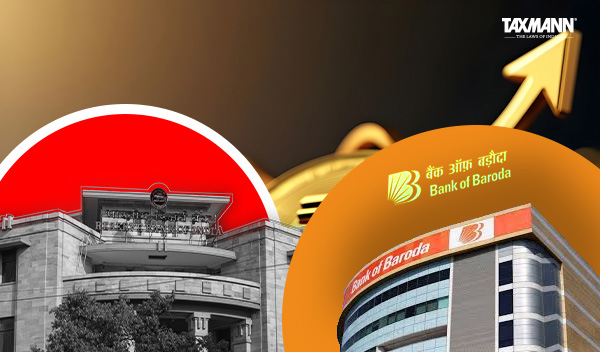
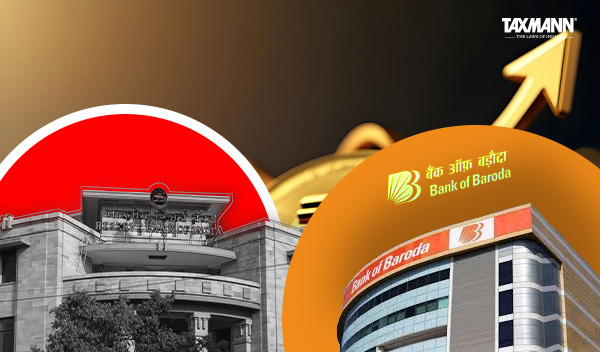
RBI Assigns Bank of Baroda as Lead Bank Responsibility for “Vav-Tharad”

RBI Assigns Bank of Baroda as Lead Bank Responsibility for “Vav-Tharad”

Circular No. RBI/2025-26/155 FIDD.CO.LBS.BC.No.09/02.08.001/2025-26; dated: 18.12.2025

1. Background Creation of a New District

The Government of Gujarat, through Gazette Notification No. GHM/2025/210/M/RD/RCO/e-file/15/2025/5360/L1 dated September 24, 2025, formally notified the creation of a new district named Vav-Tharad.

The formation of the new district necessitated corresponding administrative and banking arrangements, including the assignment of Lead Bank responsibility under the Lead Bank Scheme.

2. RBI’s Decision on Lead Bank Assignment

Following the creation of the new district, the Reserve Bank of India (RBI) has assigned Bank of Baroda as the Lead Bank for the newly formed Vav-Tharad district

This designation entrusts Bank of Baroda with the responsibility of coordinating banking and credit-related initiatives in the district.

3. Role of the Lead Bank

As the Lead Bank for Vav-Tharad district, Bank of Baroda will be responsible for:

  • Coordinating implementation of government-sponsored schemes
  • Promoting financial inclusion initiatives
  • Facilitating district-level credit planning
  • Convening and supporting District Consultative Committee (DCC) and related meetings
  • Acting as the nodal bank for interaction with district administration and other banks

4. No Change for Other Districts in Gujarat

The RBI has also clarified explicitly that:

  • There is no change in the Lead Bank responsibilities for any other districts in the State of Gujarat
  • Existing Lead Bank arrangements for all other districts continue unchanged

This clarification ensures continuity and avoids operational ambiguity for banks operating in the state.

5. Regulatory Intent

The assignment seeks to:

  • Ensure smooth banking administration in the newly created district
  • Maintain alignment between administrative reorganisation and banking infrastructure
  • Support credit delivery, financial inclusion, and local economic development in Vav-Tharad
  • Provide clarity to banks and stakeholders under the Lead Bank Scheme

6. Key Takeaways

  • Vav-Tharad is a newly created district in Gujarat
  • Bank of Baroda is designated as the Lead Bank for the district
  • No changes have been made to Lead Bank assignments in other districts of Gujarat
  • Banks should update internal jurisdictional and coordination records accordingly
Click Here To Read The Full Circular

The post RBI Assigns Bank of Baroda as Lead Bank Responsibility for “Vav-Tharad” appeared first on Taxmann Blog.

source

Categories
Blog Updates

Subsidiary’s Services to US Parent Are Zero-Rated Exports – ITC Refund Allowed | HC

Zero-rated export services

Case Details: Infodesk India (P.) Ltd. vs. Union of India - [2025] 181 taxmann.com 395 (Gujarat)

Judiciary and Counsel Details

  • A.S. Supehia & Pranav Trivedi, JJ.
  • Anand Nainawati for the Petitioner.
  • Deepak N KhanchandaniParam V Shah for the Respondent.

Facts of the Case

The petitioner was a wholly owned Indian subsidiary of a US company established exclusively to provide services fulfilling the parent company’s technical requirements by assisting it in carrying on the business of software development and related consultancy. It managed IT infrastructure, editorial and content creation activities, customer support, and raised tax invoices for providing software consultancy services directly to the parent company. It was submitted that the services were provided in an independent capacity and not as an agent or intermediary. The matter was accordingly placed before the High Court.

High Court Held

The High Court held that the petitioner was required to assist the parent company in carrying on its software consultancy business. The Court observed that the petitioner was to perform the services on its own account with payment based on actual costs plus an 8 per cent markup, thereby earning a profit. It found that the petitioner could not be regarded as an intermediary or agent and that the services were zero-rated exports. The Court directed the jurisdictional officer under GST to process the refund claim for unutilised input tax credit in accordance with Section 16 of the IGST Act and Section 54 of the CGST Act.

List of Cases Referred to

The post Subsidiary’s Services to US Parent Are Zero-Rated Exports – ITC Refund Allowed | HC appeared first on Taxmann Blog.

source

Categories
Blog Updates

Negative Blocking of ECL Without Available ITC Held Impermissible | HC

Negative blocking of ECL

Case Details: ISKCON Steel Traders vs. Union of India - [2025] 181 taxmann.com 396 (Punjab & Haryana)

Judiciary and Counsel Details

  • Mrs Lisa Gill & Parmod Goyal, JJ.
  • Deepak Gupta, Adv. for the Petitioner.
  • Ajay Kalra, Sr. Standing Counsel & Ms Ridhi Bansal, Adv. for the Respondent.

Facts of the Case

The petitioner challenged the action of the jurisdictional officer under GST effected negative blocking of input tax credit (ITC) in the Electronic Credit Ledger under Rule 86A of the CGST Rules. The petitioner submitted that Rule 86A does not authorise blocking of ITC exceeding the credit actually available and that negative blocking without available ITC is impermissible. The matter was accordingly placed before the High Court.

High Court Held

The High Court permits withholding only of available ITC in the Electronic Credit Ledger and does not authorise negative blocking in absence of available credit. The Court observed that the provision is designed for emergent situations and can be exercised without prior notice but must be limited to credit actually present in the ledger. The Court further held that the authorities retain the statutory remedies for recovery under Sections 73 and 74 of the CGST Act if any amount is due. The Court directed that negative blocking without available ITC is impermissible.

List of Cases Referred to

The post Negative Blocking of ECL Without Available ITC Held Impermissible | HC appeared first on Taxmann Blog.

source

Categories
Blog Updates

IBBI Introduces CP Form Modification Utility and Late Fee for Delayed Filings

IBBI CP Forms delayed filing fee

Circular No. IBBI/CIRP/89/2025; Dated: 18.12.2025

1. Regulatory Background

The Insolvency and Bankruptcy Board of India (IBBI) has introduced important procedural changes relating to filing of forms under Regulation 40B of the IBBI (Corporate Insolvency Resolution Process) Regulations.

The changes include:

  • Introduction of a modification utility for CP Forms filed on the IBBI portal, and
  • Commencement of levy of fees for delayed filing of forms.

These measures aim to improve data accuracy, regulatory compliance, and timeliness of disclosures by Insolvency Professionals (IPs).

2. Introduction of Modification Utility in CP Forms

To address errors or omissions in filings, IBBI has enabled a modification utility on the portal.

2.1 Key Feature

Where an Insolvency Professional identifies any deficiency in a form already submitted, the IP may:

  • Access the modification utility, and
  • Make the necessary corrections or updates to the filed CP Form.

2.2 Regulatory Significance

  • Eliminates the need for informal correspondence or re-filing
  • Ensures accuracy and completeness of insolvency process data
  • Facilitates better regulatory monitoring and analytics

3. Levy of Fee for Delayed Filing of Forms

IBBI has also operationalised the fee mechanism for delayed filing as provided under Regulation 40B of the CIRP Regulations.

3.1 Applicability

  • Applies to all forms that were due on or before 31 December 2025
  • Where such forms are submitted after 31 December 2025, a fee becomes payable

3.2 Fee Structure

  • ₹500 per form
  • For each calendar month of delay
  • Fee is calculated form-wise, not consolidated

This introduces a recurring financial consequence for prolonged delays.

4. Effective Date

  • The fee requirement applies to all eligible delayed forms filed after 31 December 2025
  • The modification utility is available immediately on the portal

5. Regulatory Intent

The measures are intended to:

  • Improve timeliness and discipline in statutory filings
  • Encourage self-correction through the modification utility
  • Reduce regulatory follow-ups on inaccurate or incomplete submissions
  • Ensure reliable insolvency ecosystem data for supervision and policymaking

6. Compliance Takeaways for Insolvency Professionals

IPs should:

  • Review all pending and past-due CP Forms immediately
  • File delayed forms at the earliest to minimise monthly fee exposure
  • Use the modification utility promptly upon identifying any error
  • Strengthen internal filing calendars and documentation checks
  • Budget for potential late fees where delays are unavoidable

Failure to comply may result in:

  • Accumulation of monthly fees
  • Regulatory scrutiny during inspections or disciplinary proceedings

7. Key Takeaway

From 1 January 2026 onwards, delayed filing of CP Forms under Regulation 40B carries a financial cost, while the newly introduced modification utility provides a structured mechanism for correcting deficiencies in filings.

Click Here To Read The Full Circular

The post IBBI Introduces CP Form Modification Utility and Late Fee for Delayed Filings appeared first on Taxmann Blog.

source

Categories
Blog Updates

[World Tax News] Dutch Government Publishes Overview of 2026 Tax Measures and More

Dutch Government's 2026 Tax Measures

Editorial Team  [2025] 181 taxmann.com 634 (Article)

World Tax News provides a weekly snippet of tax news from around the globe. Here is a glimpse of the tax happening in the world this week:

1. Dutch Government Publishes Overview of 2026 Tax Measures

The Dutch Ministry of Finance has released an overview of the main tax changes for 2026 following Senate approval of the 2026 Tax Plan and related laws on 16 December 2025.

Key measures include revised income tax brackets (lower first-bracket rate, higher second-bracket rate, unchanged top rate), a further reduction in the self-employed deduction, amendments to the ETK scheme restricting tax-free reimbursements, lower income thresholds for the labour tax credit, and the introduction of CBAM levies on imports based on CO₂ emissions.

Additional changes include reduced tax incentives for electric and plug-in hybrid vehicles, a lower taxable benefit discount for zero-emission company cars, an increase in VAT on short-term accommodation (excluding camping), a reduction in real estate transfer tax for residential property, a higher gambling tax rate, new reporting obligations for crypto-asset service providers under DAC8, and an increase in late-payment interest to 4.3% from 2026.

The Senate also approved several accompanying bills, covering technical tax amendments effective from 1 January 2026, distance-based flight taxation from 2027, streamlined taxpayer inspection rights, updates to the Minimum Tax Act aligned with OECD guidance (largely retroactive), implementation of DAC9 for exchange of GloBE information, and further amendments to environmental legislation to operationalise CBAM.

Source  Government of the Netherlands

2. Australia Releases New and Updated Pillar Two Guidance, Including for Tax Consolidated Groups

The Australian Taxation Office (ATO) released new guidance on the Pillar Two global minimum tax on 17 December 2025, focusing on the interaction of the Pillar Two rules with Australia’s tax consolidation regime. The newly issued guidance addresses, in particular:

  • Pillar Two lodgment obligations for tax consolidated groups, explaining how filing requirements apply where entities are members of a tax consolidated group;
  • Top-up tax for tax consolidated groups, outlining the methodology for calculating and allocating top-up tax within consolidated groups; and
  • Pillar Two reporting for tax consolidated groups, describing available reporting simplifications for consolidated groups under the Pillar Two framework.

In addition, the ATO has updated several related guidance materials, including:

  • Global and domestic minimum tax, providing an overview of the implementation of Pillar Two under the OECD/G20 Two-Pillar Solution for multinational groups in Australia;
  • When and how the Pillar Two rules apply, explaining the operation, scope, and applicability of the global and domestic minimum tax rules;
  • Lodging, paying and other Pillar Two obligations, setting out compliance requirements such as returns, payment obligations, and key deadlines;
  • Transitional CbC reporting safe harbour, detailing the application of the transitional Country-by-Country reporting safe harbour under Pillar Two; and
  • Specific Pillar Two issues, addressing particular matters raised by stakeholders through consultation and other channels that are not covered elsewhere in the Pillar Two guidance.

Source Australian Taxation Office

Click Here To Read The Full Article

The post [World Tax News] Dutch Government Publishes Overview of 2026 Tax Measures and More appeared first on Taxmann Blog.

source

Categories
Blog Updates

Policy Advocacy for EU–India Business Is Charitable Activity u/s 2(15) | ITAT

Charitable activity under section 2(15)

Case Details: Federation of European Business in India vs. Commissioner of Income-tax (Exemption) - [2025] 181 taxmann.com 303 (Delhi-Trib.)

Judiciary and Counsel Details

  • Challa Nagendra Prasad, Judicial Member & Avdhesh Kumar Mishra, Accountant Member
  • Amol SinhaAnkit Kumar, Advs. for the Appellant.
  • Jitender Singh, CIT-DR for the Respondent.

Facts of the Case

The assessee, a non-profit company, registered under section 8 of the Companies Act, 2013, filed its Form No. 10AB for regular registration under section 12A(1)(ac)(vi) as it was engaged in ”Advancement of any other objects of general public utility”, which were charitable activities.

The CIT (Exemptions) rejected the request for regular registration under section 12A(1)(ac)(vi) and also cancelled the provisional registration granted for assessment years 2024-25 to 2026-27 on the ground that the assessee was not engaged in any charitable activity as defined under section 2(15).

ITAT Held

On appeal, the Delhi Tribunal held that as per the object of the assessee, it had to promote commerce in India with the European Union business community and to protect & facilitate the interest of the European Union business community in India by advocacy of policy between the European Union business community and the Indian public authorities regarding trade policy, ease of doing business, intellectual property right protection and European union investment protection in India.

It was evident from the assessee’s object that it had to build an overall environment that secures the interests and well-being of the European Union business community, so that they have ease of doing business in India. The issue here was only whether an entity that watches over the business interests of its members can be said to be engaged in charitable activities as defined under section 2(15).

In the given case, it was not the case of the CIT that the assessee was found engaged in any trade and commerce. The assessee was various European business entities, European trade associations, etc. Thus, the CIT was not justified in the eyes of the law by rejecting the registration under section 12A on the reason that the assessee was not doing any charitable activity within the ambit of section 2(15).

List of Cases Reviewed

List of Cases Referred to

The post Policy Advocacy for EU–India Business Is Charitable Activity u/s 2(15) | ITAT appeared first on Taxmann Blog.

source

Categories
Blog Updates

Minor Penalties Don’t Bar Voluntary Retirement Under Master Circular 35 | HC

Voluntary retirement under Master Circular 35

Case Details: Union of India vs. Dharmendra Kumar Sahu - [2025] 181 taxmann.com 281 (HC-Allahabad)

Judiciary and Counsel Details

  • Attau Rahman Masoodi & Subhash Vidyarthi, JJ.
  • Ajit Kumar Dwivedi for the Petitioner.
  • Amit Verma, learned Counsel for the Respondent.

Facts of the Case

In the instant case, the Respondent, a railway servant, applied for voluntary retirement citing health issues. No order was passed on his application, leading him to file an original application seeking a direction to decide his voluntary retirement request. In the original application, he pleaded completion of more than 22 years of service.

Petitioners-employer admitted before the Tribunal that the respondent had completed more than 22 years of service, and stated that two minor punishments had been imposed on 19.02.2020. The Tribunal allowed the original application and directed the petitioners to grant the respondent’s request for voluntary retirement upon the expiry of the statutory period of 90 days and to pay him all his retirement dues.

Petitioners filed an instant writ challenging the validity of the order passed by the Tribunal.

It was noted that the Master Circular No. 35 issued by the Railway Board does not provide that the request for voluntary retirement of a person who has been awarded a minor punishment cannot be accepted.

Further, petitioners did not controvert the specific plea of the railway servant that he had completed more than 22 years of service; there was no reason to take a view different from the view taken by the Tribunal by issuing a direction to petitioners to allow the railway servant’s request for voluntary retirement.

High Court Held

The High Court held that the respondent had already been punished for his unauthorised absence from duty and that punishment did not provide that periods during which the respondent remained absent shall not be counted in his service or that he shall not be paid salary for those periods. Thus, there was no illegality in the impugned orders passed by the Tribunal allowing the original application filed by the respondent.

The post Minor Penalties Don’t Bar Voluntary Retirement Under Master Circular 35 | HC appeared first on Taxmann Blog.

source

Categories
Blog Updates

[Opinion] Charitable Trust – Registration Under MSME Act, 2006, Rights and Obligation and Applicability of 43B(h)

Section 43B(h) applicability to charitable trusts

CA Naresh Kumar Kabra & Rachit Gupta  [2025] 181 taxmann.com 522 (Article)

1. Introduction

As Section 43B(h) reshapes how businesses handle payments to MSEs, many charitable institutions are now asking a critical question—does this rule apply to them too? To understand the same let us first know what is section 43B(h) of the Income tax Act, 1961.

With effect from 1st April 2023 (Assessment Year 2024-25 onward), a new clause – clause (h)—has been added to Section 43B. Under this clause, amounts payable to a micro or small enterprise must be paid within the time-limit prescribed under the Micro, Small and Medium Enterprises Development Act, 2006 (MSMED Act), if the payer wants to claim the deduction in the same year.

In simple words, if a business buys goods or services from a registered MSME and does not pay them on time, the expense will NOT be allowed as a deduction in the same financial year it will be allowed only in the year in which the payment is actually made.

Now to understand the time limit prescribed let us read the Section 15 of the MSMED Act, 2006, the said section states that

“Where any supplier supplies any goods or renders any services to any buyer, the buyer shall make payment therefor on or before the date agreed upon in writing between the supplier and the buyer or, where there is no agreement in this behalf, before the appointed day”.

It further states that:

“In no case shall the period agreed upon in writing exceed forty-five days from the day of acceptance or the day of deemed acceptance.”

If payment is delayed beyond the statutory limit, the buyer is liable to pay interest as per Section 16 of the MSMED Act. This interest is charged at 3 times the bank rate notified by the RBI.

Here the Appointed day means 15th day from the date of acceptance of goods or services, it can be understood that where there is no written agreement between buyer and Supplier registered under MSMED act, 2006 the payment must be made within 15 days from the day of acceptance of goods or service and where there is an agreement then the maximum permissible limit for making the payment is 45 days and if the payment is not made within the time limit, the expense shall not be allowed as deduction while computing the income under the Income Tax Act, 1961 and further interest on shall be charged for the delay made in the payment. This amendment signals a major shift – from an accrual-based deduction regime to a payment-based deduction regime for MSE-related payments thereby promoting prompt payments and supporting the liquidity of small enterprises.

2. Applicability of Section 43B(h) on Charitable Institutions

Now let us understand the applicability of Section 43B(h) on different categories of Assesses, for the regular assesses there is no confusion this section applies as discussed above. To get the clarity on the applicability of 43B(h) on charitable institutions let us go through the chapter wise bifurcation of the Income Tax Act, it can be said that the taxation of the Charitable institutions or Trusts is within the Scope of Chapter III of the Act which contains the sections from Section 11 to 13 and the applicability of 43B(h) is covered under Chapter IV of the Act, therefore it can be said that Section 43B(h) is not within the scope of Chapter III of the Act which governs the Trust Taxation.

Further under Sections 11 to 13, there are specific references to the provisions of ‘Profits & Gains of Business or Profession’ which have been made applicable to the computation of income under Section 11, such as the disallowances for cash payments above Rs. 10,000 under section 40A(3) or disallowances for non-deduction of tax on payments made to residents under section 40(a)(ia). However, there is no reference to disallowance under Section 43B(h) while computing income under Section 11. From the above references and facts it can be understood that 43B(h) does not applies to the Charitable Institution.

3. Trust Expenditure – The Actual Application Rule

The applicability of Section 43B(h) is effective from 1st April 2023, however, long before this amendment from The Finance Act 2022, the Income-tax Act set the line for treatment of expenditure of charitable and religious trusts, it is fundamentally governed by the concept of actual application, as reflected across Sections 11 and 12. Section 11(1)(a) allows exemption only for income “applied” during the year, a term consistently interpreted to mean actual spending rather than accrual.

This payment-linked approach is further reinforced by Sections 11(1)(b), 11(1)(c), and 11(2), all of which emphasise real utilisation of funds and not mere book entries. Section 12 subjects voluntary contributions to the same application requirements, while Section 13 examines the actual utilisation of funds to ensure they are not misapplied for the benefit of specified persons.

Taken together, these provisions create an inherently stringent framework under which trusts receive tax benefits only on actual payment, with no scope for recognition of accrued expenses. As a result, trusts already operate under a regime more restrictive than the timelines introduced for business entities under Section 43B(h), since trusts are never permitted to claim expenditure until the moment of actual outflow—irrespective of any statutory grace period applicable elsewhere.

Click Here To Read The Full Article

The post [Opinion] Charitable Trust – Registration Under MSME Act, 2006, Rights and Obligation and Applicability of 43B(h) appeared first on Taxmann Blog.

source