Categories
Blog Updates

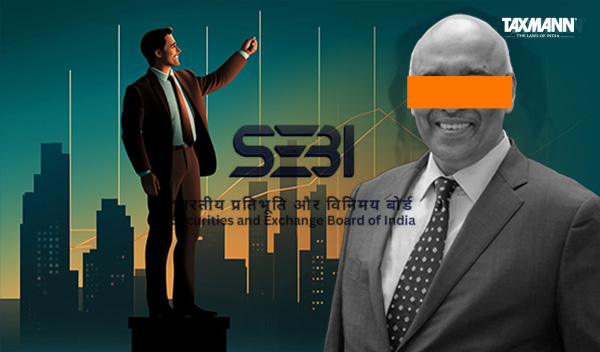
N. Venkatram Appointed Part-Time Member Of SEBI

Shri N. Venkatram SEBI Appointment

Notification No. S.O. 6100(E), Dated 30.12.2025

1. Introduction

The Central Government has appointed Shri N. Venkatram as a Part-Time Member of the Securities and Exchange Board of India (SEBI). The appointment reflects the Government’s continued efforts to strengthen the governance and expertise of the securities market regulator.

2. Details Of The Appointment

Shri N. Venkatram will serve as a Part-Time Member of SEBI for a term of three years from the date he assumes charge. The appointment is subject to the conditions specified by the Central Government, ensuring continuity and regulatory oversight within SEBI’s framework.

3. Professional Background

Shri N. Venkatram currently serves as the Country Chair for CDPQ India and CDPQ Global. He brings extensive experience in investment management, global finance, and institutional governance, which is expected to contribute meaningfully to SEBI’s regulatory and policy-making functions.

4. Tenure And Terms

The tenure of Shri N. Venkatram’s appointment will continue for three years, or until he attains the age of seventy years, or until further orders, whichever is earlier. These conditions align with statutory provisions governing appointments to SEBI’s Board.

5. Conclusion

The appointment of Shri N. Venkatram as a Part-Time Member of SEBI is expected to enhance the Board’s expertise and decision-making capabilities. His experience in global finance is likely to support SEBI’s mandate of ensuring orderly development and regulation of India’s securities markets.

Click Here To Read The Full Notification

The post N. Venkatram Appointed Part-Time Member Of SEBI appeared first on Taxmann Blog.

source

Categories
Blog Updates

Donations For Religious Events Not Taxable | ITAT

Donations Not Taxable As Business Income

Case Details: Krishna Janmashtmi Mahotsav Samiti vs. Income-tax Officer, Exemption [2025] 181 taxmann.com 879 (Delhi - Trib.)

Judiciary and Counsel Details

  • Anubhav Sharma, Judicial Member.
  • Manish Agarwal, Accountant Member.
  • Nitin Gulati, Adv. & Yashu Goel, CA for the Appellant.
  • Jitender Singh, CIT DR for the Respondent.

Facts of the Case

The assessee, Krishna Janmashtmi Mahotsav Samiti, a public charitable trust registered under section 12A and approved under section 80G, was engaged in organising religious and cultural activities, including Janmashtami Mahotsav, conducting religious discourses, arranging free meals (bhandaras), establishing ashrams, and constructing dharamshalas. For A.Y. 2014-15, the assessee filed a nil return claiming exemption under sections 11 and 12.

During assessment proceedings under section 143(3), the Assessing Officer noted that the assessee had received donations during the Janmashtami Mahotsav. Based on replies received from certain donors under section 133(6) stating that donations were given for publicity or advertisement, the Assessing Officer treated such receipts as business promotion or advertisement income and made an addition by denying exemption under section 11. The Commissioner (Appeals) upheld the addition.

On appeal, the Tribunal observed that the objects of the assessee-trust were purely religious and cultural and not covered under “advancement of any other object of general public utility”. It was further noted that the Revenue did not dispute that the donations were utilised for organising religious events, providing free meals, conducting discourses, and for the construction of religious infrastructure, all of which were in furtherance of the trust’s declared objects.

Tribunal Held

The Tribunal held that the mere display of donor names on banners, posters, or event sites was only an acknowledgement of their contributions and did not confer any commercial benefit on the donors. In the absence of any profit motive, such receipts could not be treated as business promotion or advertisement income.

Accordingly, the Tribunal held that the Assessing Officer was not justified in treating the donations as business promotion receipts and in denying exemption under sections 11 and 12. The addition was deleted, and the assessee’s appeal was allowed.

The post Donations For Religious Events Not Taxable | ITAT appeared first on Taxmann Blog.

source

Categories
Blog Updates

ICAI 2025 | Key Amendments And Guidance Notes

ICAI 2025 Amendments

1. Introduction

The year 2025 witnessed significant regulatory and standard-setting activity by the Institute of Chartered Accountants of India (ICAI), reflecting its continued commitment to strengthening the financial reporting, auditing and assurance. During the year, ICAI issued exposure drafts, implementation guides, manuals, and technical guidance, addressing evolving business practices, global developments in Ind AS/IFRS and auditing standards. Further, ICAI has also amended some of the Ind AS. Considering all the developments, we have prepared consolidated overview of the key amendments, exposure drafts, and technical publications issued by ICAI in 2025, highlighting their scope, objectives, and practical implications for professionals and stakeholders.

2. Amendments

2.1 MCA notifies Ind AS amendments 2025 with key updates on supplier finance, liability classification & Pillar Two taxes

The Companies (Indian Accounting Standards) Second Amendment Rules, 2025 introduce targeted amendments to several Ind AS with the objective of improving clarity, consistency, and alignment with recent IFRS developments. The key amendments and important aspects are summarised below:

(a) Ind AS 1 – Classification of Liabilities:

Detailed guidance has been introduced on classifying liabilities as current or non-current, particularly where loan covenants exist. The amendments clarify that classification depends on the entity’s right to defer settlement at the reporting date, not on management intention or events after the reporting period. Additional disclosure requirements have been introduced where compliance with covenants is required after the reporting date.

(b) Ind AS 7 and Ind AS 107 – Supplier Finance Arrangements:

New disclosure requirements have been introduced for supplier finance (or supply chain finance) arrangements. Entities are required to disclose information on terms, carrying amounts, payment ranges, and the impact of such arrangements on cash flows and liquidity risk.

(c) Ind AS 12 – Pillar Two Income Taxes:

Amendments introduce specific guidance on OECD Pillar Two minimum tax rules. Entities are prohibited from recognising deferred tax assets or liabilities related to Pillar Two taxes and are required to provide specific disclosures on current tax and exposure to such legislation.

Overall, the amendments focus on improving transparency, especially in relation to liability classification, supplier finance arrangements, and international tax reforms, and are effective mainly from 1st April 2025, with certain provisions applicable from 1st April 2026.

3. Exposure Drafts issued in the year 2025

3.1 Exposure draft of Ind AS 118: Presentation and Disclosure in Financial Statements

The Institute of Chartered Accountants of India (ICAI) has issued an exposure draft of Ind AS 118,Presentation and Disclosure in Financial Statements which deals with how information is presented and disclosed in financial statements. This draft is aligned with IFRS 18, issued by the International Accounting Standards Board (IASB) in April 2024.

IFRS 18 introduces a new and structured approach to presenting income and expenses by classifying them into five categories: operating, investing, financing, income taxes, and discontinued operations. It also prescribes new mandatory subtotals in the statement of profit or loss and enhances disclosure requirements, particularly in relation to management-defined performance measures.

Ind AS 118 is proposed to be applied in India for financial reporting periods beginning on or after 1st April 2027, consistent with the global effective date of IFRS 18, which applies from 1stJanuary 2027.

To understand the news in detail, Click here

3.2 Exposure draft on Ind AS 109 and Ind AS 107 for electricity contracts dependent on natural sources

ICAI has issued an exposure draft proposing amendments to Ind AS 109 and Ind AS 107 to clarify the accounting and disclosure requirements for contracts linked to nature-dependent electricity, such as solar and wind power. The amendments provide guidance on when such contracts fall within Ind AS 109, Financial Instruments and permit their use in hedge accounting for future electricity consumption.

The draft also enhances disclosure requirements under Ind AS 107, Financial Instruments: Disclosuresrequiring entities to explain the impact of these contracts on cash flows, unused electricity, and related risks. The proposed transition provisions allow limited retrospective application. Overall, the amendments aim to improve clarity, transparency, and risk management for renewable energy–linked electricity contracts.

To understand the news in detail, Click here

3.3 Exposure draft on amendment of Ind AS 21

Indian Accounting Standards (Ind AS) are substantially converged with the IFRS Standards issued by the International Accounting Standards Board (IASB). As IFRS Standards are issued or amended from time to time, the Accounting Standards Board (ASB) of the Institute of Chartered Accountants of India (ICAI) reviews these changes to assess the need for corresponding updates to Ind AS and to maintain alignment.

As part of this ongoing convergence process, the ASB has issued an Exposure Draft inviting public comments on the “Amendments to Ind AS 21, Translation to a Hyperinflationary Presentation Currency.

To understand the news in detail, Click here

3.4 Exposure draft of the manual on Concurrent Audit of Banks

The Internal Audit Standards Board of ICAI has issued an exposure draft of the “Manual on Concurrent Audit of Banks” to guide members in conducting consistent, high-quality, and effective concurrent audits. The draft explains the objectives, scope, and approach of concurrent audits and highlights their role in strengthening banks’ internal controls and risk management.

It provides practical guidance on audit planning, execution, documentation, and reporting, in line with RBI regulations and other applicable requirements. The manual also includes sector-specific guidance on key banking areas such as credit, deposits, treasury, advances, foreign exchange, and compliance with KYC and AML norms, while emphasizing auditor independence, professional judgment, and ethical conduct.

Click Here To Read The Full Story 

The post ICAI 2025 | Key Amendments And Guidance Notes appeared first on Taxmann Blog.

source

Categories
Blog Updates

GSTN Introduces System Blocks on Excess ITC Re-claim and RCM ITC in GSTR-3B

Excess ITC Re-claim

GSTN Advisory, Dated 29-12-2025

Regulatory Background

The Goods and Services Tax Network (GSTN) has issued an advisory along with FAQs introducing system-based validations for:

  • ITC Reclaim Ledger, and

  • Reverse Charge Mechanism (RCM) Liability / ITC Statement

These validations are aimed at strengthening accuracy and discipline in Input Tax Credit (ITC) and RCM reporting in Form GSTR-3B.


Purpose of the System Validations

The newly introduced validations seek to ensure that:

  • ITC reclaimed in GSTR-3B is supported by available balances in the ITC Reclaim Ledger

  • RCM ITC is claimed only after corresponding RCM liability is duly discharged

  • Excess or unsupported ITC claims are prevented at the return-filing stage itself, rather than being detected post-filing


Blocking of GSTR-3B Filing

As clarified through the FAQs:

  • GSTR-3B filing will be blocked if:

    • The ITC being reclaimed exceeds the balance available in the ITC Reclaim Ledger, or

    • The RCM ITC claimed exceeds the balance reflected in the RCM Liability / ITC Statement

The GST system will not permit submission of GSTR-3B until these discrepancies are resolved.


Mandatory Actions Before Filing GSTR-3B

To enable successful filing of GSTR-3B, taxpayers must:

  • Reverse any excess ITC claimed beyond the available reclaim balance, or

  • Pay the additional RCM liability, where RCM ITC is claimed in excess

Only after such adjustment—either through reversal or payment—will the system allow submission of the return.


System-Driven Validation Mechanism

Under the revised framework:

  • Ledger balances act as hard controls

  • Claims reported in GSTR-3B must strictly align with:

    • ITC Reclaim Ledger balances, and

    • RCM Liability / ITC Statement balances

  • Filing is accepted only after full alignment is achieved

This ensures real-time compliance and reduces post-filing disputes.


Implications for Taxpayers and Practitioners

For Taxpayers

  • Enhanced need for pre-filing reconciliation

  • Continuous tracking of:

    • Reversed vs. reclaimed ITC

    • RCM liability payments and ITC availability

  • Reduced risk of notices and mismatches after return filing

For Tax Professionals

  • Greater importance of:

    • Ledger-based validations before filing

    • Advising clients on timely reversals or payments

  • Need to update internal checklists and SOPs for GSTR-3B preparation


Regulatory Intent

Through these validations, GSTN aims to:

  • Promote system-driven compliance

  • Prevent incorrect or premature ITC claims

  • Strengthen the integrity of the GST credit mechanism

  • Reduce downstream litigation and enforcement action


Key Takeaway

GSTN has implemented mandatory system validations ensuring that ITC reclaimed and RCM ITC claimed in GSTR-3B do not exceed ledger balances. If excess claims are made, GSTR-3B filing will be blocked until the excess ITC is reversed or the additional RCM liability is paid—making ledger reconciliation a critical pre-filing requirement.

Click Here To Read The Full Update

The post GSTN Introduces System Blocks on Excess ITC Re-claim and RCM ITC in GSTR-3B appeared first on Taxmann Blog.

source

Categories
Blog Updates

MSME Policy in India – Framework | Compliance | Documentation

MSME policy in India

The MSME Policy in India refers to the comprehensive framework of laws, regulations, schemes, and institutional support measures formulated by the Government of India to promote, protect, and develop Micro, Small and Medium Enterprises (MSMEs). The policy aims to enhance employment generation, entrepreneurship, competitiveness, formalisation, and inclusive economic growth, while ensuring ease of doing business for small enterprises.

Table of Contents

  1. Policy Framework for MSME in India
  2. Key Laws and Regulations Governing MSMEs in India
  3. Necessary Compliance and Documentation for MSMEs
Check out Taxmann's Micro Small and Medium Enterprises which is an authoritative, practice-oriented handbook developed as the official courseware for IIBF, offering a comprehensive and up-to-date overview of India's MSME ecosystem. It explains MSME definitions, classifications, policies, regulatory requirements, financing frameworks, compliance obligations, operational practices, and digital advancements, including FinTech lending, TReDS, and sustainability metrics. Integrating the latest government schemes, revised thresholds, Budget 2025–26 updates, RBI/CGTMSE guidelines, and global trends, the book blends foundational clarity with practical guidance. With 15 chapters and 13 annexures, it provides actionable tools, case studies, diagnostics, and rehabilitation frameworks. It serves as an essential resource for bankers, entrepreneurs, policymakers, advisors, and students involved in MSME development and finance.

1. Policy Framework for MSME in India

The approach to economic development since Independence has been historically driven by the premise that the launching of large investment projects would inevitably result in the growth of small industrial establishments to service the requirements of the “mother” industry.

It was only during the 1950-70 period that the growth of the small industry sector occurred and several policy measures were initiated.

Industries (Development and Regulation) Act of 1951  This Act provided the basic framework for the post-independence industrialisation strategy. Regulatory policies were laid down for the regulation of licensing, location, production, pricing, imports, exports, foreign exchange controls, inter-state movement of commodities and several other areas of industrial operation. For small-scale industries, there were regulations regarding definition which was in terms of ownership i.e. a small-scale unit had to be an entrepreneur-directed concern and not a subsidiary to another industrial undertaking.

Karve Committee Report (1955)  This was one of the earliest of the exercises which recommended a protective environment for the growth of small industries in India. Supportive policies through the 1960s, 70s and 80s took the form of reservation of products exclusively for the SSI sector (at one point, 836 products were reserved exclusively for SSIs), grant of fiscal concession and government procurement of supplies from the sector.

Expert Committee on Small Enterprises This stated that “Small enterprises will continue to need exceptional support in terms of financial resources, technological development and infrastructure.” (Expert Committee on Small Enterprises; 1997 21).

IIBF X Taxmann's Micro Small and Medium Enterprises

The evolution of the policy framework and support measures of the Government can be broadly grouped into the following three periods:

1948-1991

  • In all the Policy Resolutions from 1948 to 1991, recognition was given to the micro and small enterprises, termed as an effective tool to expand employment opportunities, help ensure equitable distribution of the national income and facilitate effective mobilisation of private sector resources of capital and skills.
  • Micro, Small and Medium Enterprises Development Organisation [earlier known as Small Industries Development Organisation (SIDO)]  This was set up in 1954 as an apex body for sustained and organised growth of micro, small and medium enterprises.
  • National Small Industries Corporation, the Khadi and Village Industries Commission and the Coir Board These were also set within next two years. The era provided the supportive measures that were required to nurture MSEs, in the form of reservation of items for their exclusive manufacture, access to bank credit on priority through the Priority Sector Lending Programme of commercial banks, excise exemption, reservation under the Government Purchase Programme and 15% price preference in purchases, infrastructure development and establishment of institutes for entrepreneurial and skill development.
  • MSME-Development Institutes [earlier known as Small Industries Service Institute (SISI)] These were set up all over India to train youth in skills/entrepreneurship. Tool Rooms were established with German and Danish assistance for providing technical services essential to MSEs as also for skill-training. At the State level, District Industries Centres were set up all over the country.

1991-1999

  • The new Policy for Small, Tiny and Village Enterprises of August 1991 laid the framework for government support in the context of liberalisation, which sought to replace protection with competitiveness to infuse more vitality and growth to MSEs in the face of foreign competition and open market. Supportive measures concentrated on improving infrastructure, technology and quality.
  • Testing Centres were set up for quality certification and new Tool Rooms as well as Sub-contracting Exchanges were established.
  • Small Industries Development Bank of India (SIDBI) and Technology Development and Modernisation Fund These were created to accelerate finance and technical services to the sector. A Delayed Payment Act was enacted to facilitate prompt payment of dues to MSEs, and an Industrial Infrastructure Development (IID) scheme was launched to set up mini-industrial estates for small industries.
  • The Ministry of MSME [earlier known as Ministry of Small-Scale Industries and Agro & Rural Industries (SSI & ARI)] came into being from 1999 to provide focused attention to the development and promotion of the sector.

2000-2019

  • The new Policy Package announced in August 2000 sought to address the persisting problems relating to credit, infrastructure, technology and marketing more effectively. A Credit Linked Capital Subsidy Scheme was launched to encourage technology upgradation in the MSE sector and a Credit Guarantee Scheme was started to provide collateral-free loans to micro and small entrepreneurs, particularly the first generation entrepreneurs.
  • Technology Upgradation and Competitiveness Scheme in the MSE sector  Credit Linked Capital Subsidy Scheme (CLCSS) launched on 1st October 2000.
    1. The purpose of the CLCSS has been to aid the MSMEs for adopting modern technology. Eligible MSMEs receive a subsidy of up to 15% on eligible capital investment in technology upgrades, with a maximum cap per unit of Rs. 15 lacs.
    2. Intent has been to enhance productivity, reduce production costs, and foster a competitive environment for Indian MSMEs by supporting the adoption of advanced, more efficient technologies, such as advanced machinery, IT tools, energy-efficient equipment and production automation.
    3. Credit-linked assistance is provided through banks and financial institutions. Online Application and Tracking System has been introduced w.e.f. 01.10.2013.
  • Market Development Assistance Scheme  The exemption limit for relief from payment of Central Excise duty was raised to Rs. 1 crore ($0.25 million) and a Market Development Assistance Scheme for MSEs was introduced. At the same time, consultations were held with stakeholders and the list of products reserved for production in the MSE sector was gradually reduced each year.
  • MSME Act, 2006  In 2006, the long-awaited enactment for this sector finally became a reality with the passage of the Micro, Small and Medium Enterprises Act 2006. In March 2007, a third Package for the Promotion of Micro and Small Enterprises was announced which comprises the proposals/schemes having direct impact on the promotion and development of the micro and small enterprises, particularly in view of the fast-changing economic environment, wherein to be competitive is the key of success.
  • Zero Defect Zero Effect (ZED) Ministry of MSME launched in 2016, Zero Defect Zero Effect (ZED) for the MSMEs aimed at ensuring that MSMEs produce goods that meet international quality standards, achieving “Zero Defect” and promote environmentally friendly production processes, leading to “Zero Effect” on the environment. MSMEs are incentivised for ZED Certification and encourage them to become MSME Champions. The scheme has been revamped in 2022.

2020-Onwards

  • Aatmanirbhar Bharat Abhiyan and MSME Schemes  Introduced in 2020 to support MSMEs during the COVID-19 pandemic:
    1. Emergency Credit Line Guarantee Scheme (ECLGS)  Rs. 3 lakh crores (later enhanced to Rs. 4.5 lakh crores) Collateral-free Automatic Loans for Businesses, including MSMEs, wherein Emergency Credit Line to Businesses/MSMEs from Banks and NBFCs up to 20% of entire outstanding credit as on cut-off date 29.2.2020 (later changed to change in to 31.03.2021). Loans to have 4-year tenor with moratorium of 12 months on Principal repayment and with Interest rate capped.
    2. Subordinate Debt for Stressed MSMEs Rs. 20,000 crores Subordinate Debt for Stressed MSMEs. Functioning MSMEs which are NPA or are stressed eligible for this. A Government provision of Rs. 4,000 Cr. to CGTMSE, and the latter’s partial Credit Guarantee support to Banks. Promoters of the MSME to be given debt by banks, which will then be infused by promoter as equity in the Unit.
    3. Fund of Funds (FOF) Scheme Rs. 50,000 cr. Equity infusion for MSMEs through Fund of Funds. Provision for FoF with Corpus of Rs. 10,000 crores to provide equity funding for MSMEs with growth potential and viability. FoF will be operated through a Mother Fund and few daughter funds. This will help to expand MSME size as well as capacity and encourage MSMEs to get listed on the main board of Stock Exchanges.
    4. New Definition of MSMEs Both in terms of investment in Plant & Machinery and Turnover with upward revision in investment ceilings.

2. Key Laws and Regulations Governing MSMEs in India

The relevance of Labour Laws for MSMEs can hardly be overemphasised, as these impact the MSME productivity, labour management and business costs. The importance of labour laws lies in protecting the workers’ rights and promoting fair working conditions.

2.1 The Code on Wages, 2019

Objectives & Purpose

  • In previous labour laws such as Minimum Wages Act, 1948, Payment of Wages Act, 1936, Payment of Bonus Act, 1965, and Equal Remuneration Act, 1976, there was inconsistency across states, lack of clarity and inefficiencies in wage calculation and enforcement.
  • Consolidation of four separate laws into one unified Code aims to reduce complexities and make wage compliance easier. Advantages of a single code approach for businesses, especially for MSMEs, which previously faced challenges in understanding and implementing multiple wage-related laws.
  • Ensures regular and timely wage payments to workers, especially in the unorganised sector, where delayed payments are common. Benefits for seasonal workers, casual labourers and migrant workers.
  • The Code on Wages 2019 aims to streamline wage-related provisions for organised and unorganised sectors.
  • Ensure fair wages, standardise wage definitions, reduce wage disparities and make wage compliance simpler.

Key Provisions of the Code on Wages, 2019

  • Uniform Wage Definition  The Code provides a clear definition of wages, which includes basic salary, dearness allowance and retaining allowance, while excluding certain allowances such as house rent allowance, overtime and conveyance. Impact on payroll structure across different sectors.
  • Minimum Wages The Code establishes a national floor wage and mandates that states set their minimum wages above this threshold. Implications for industries in states with historically low minimum wages.
  • Payment of Wages  Expansion of the scope for wage payment requirements, including electronic payments.
  • Stipulates Timelines for Wage Payments Wages must be paid either daily, weekly, bi-weekly or monthly depending on the worker’s classification.
  • Equal Remuneration  Reinforces the principle of equal pay for equal work, irrespective of gender. Implications for gender wage equality in sectors with substantial gender disparities, such as manufacturing.
  • Reducing Wage Disparities  Seeks to reduce wage disparities across states by introducing a national floor wage. Potential implications for labour mobility and wage standardisation across India.
  • Bonus Provisions  Continuation of bonus provisions, covering employees earning up to a specified threshold. Implications for firms in terms of profitability and incentive structures for workers.

2.2 The Industrial Relations Code, 2020 of India

Objectives & Purpose

  • Specifically addressing outdated provisions of the Industrial Disputes Act (1947), the Trade Unions Act (1926) and the Industrial Employment (Standing Orders) Act (1946).
  • Unification into one cohesive code, simplification and modernisation of labour laws to suit the evolving labour landscape in India.
  • Simplify labour regulations, improve ease of doing business, encourage investments and balance the interests of employers and workers.
  • Reduce industrial conflicts and strikes while safeguarding worker rights and simplifying the dispute resolution process.

Key Provisions of the Industrial Relations Code, 2020

  • Provisions on Industrial Disputes  Redefines industrial disputes and outlines procedures for dispute resolution. New provisions regarding strikes, lockouts and the resolution of grievances at the industry level.
  • Standing Orders Applicability – Stipulates applicability of standing orders for organisations with 300 or more workers, providing flexibility for smaller establishments. Requirement for employers to frame clear standing orders for matters such as working hours, leave policies and disciplinary proceedings.
  • Trade Unions Registration and Rights – Simplifies registration procedures for trade unions and grants them representative rights. Rules for central and state-level recognition of trade unions as well as membership requirements.
  • Strikes and Lockouts  Conditions for legal strikes laid with mandatory 60-day notice before any strike or lockout. Regulations around strikes in public utility services, dispute redressal periods and strike exemptions for essential services.

2.3 The Occupational Safety, Health and Working Conditions Code, 2020

Objectives & Purpose

  • Modernise, streamline and simplify compliance requirements for industries while safeguarding workers’ health, safety, and working conditions.
  • India’s OSH Code, 2020, replaces laws including the Factories Act (1948), Mines Act (1952) and Building and Other Construction Workers Act (1996), addressing gaps and complexities in earlier legislation.
  • Create a uniform regulatory framework for worker safety and health, balancing productivity and welfare.
  • Applies to Establishments With 10 or More Workers and Covers Multiple Sectors  manufacturing, mining, construction and more.
  • Enhanced Worker Safety and Health Standards  How improved safety standards contribute to worker well-being, reducing accident rates and work-related illnesses. Positive impacts on worker morale, retention and overall productivity due to a safe work environment.
  • Ease of Doing Business and Regulatory Simplification  Unified compliance framework facilitates business operations and reduces the bureaucratic load on industries. Simpler regulations attract investment by creating a stable regulatory environment.
  • Potential for Economic Growth  Encourages modernisation in manufacturing, construction and other sectors by making worker safety an integral part of industrial growth. Contribution to India’s GDP growth and workforce productivity through reduced absenteeism and healthier work conditions.

Key Provisions of the OSH Code, 2020

  • Coverage and Applicability Applies to establishments with 10 or more workers and all hazardous establishments, irrespective of the number of employees. Key sectors covered factories, construction, mines, docks, plantations and motor transport undertakings.
  • Health and Safety Standards  Defines safety guidelines, physical standards, and requirements for workplace conditions like lighting, ventilation, and sanitation. Special provisions for hazardous processes, such as mandatory safety training, medical checks and provisions for emergency exits.
  • Work Hours and Leave  Sets standard work hours, overtime, and provisions for weekly rest. Special rules for night shifts and work breaks. Prescribes annual, casual and medical leave entitlements, with variations for different sectors.
  • Welfare Provisions  Facilities like canteens, first-aid, restrooms, and crèches for establishments employing 50 or more female workers. Welfare officers in factories and mines with 250 or more employees.

2.4 The Social Security Code, 2020

Objective & Purpose

  • Aimed at consolidating multiple social security laws into a unified framework.
  • Replaces nine laws, including the Employees’ Provident Fund Act (1952), Employees’ State Insurance Act (1948) and Maternity Benefit Act (1961), among others.
  • To provide comprehensive social security for employees across organised, unorganised and gig sectors. Applicable to all sectors, including factories, plantations, mines, construction and the unorganised sector. Encompasses new categories such as gig and platform workers, recognising their contributions to the economy.
  • The Social Security Code, 2020, is part of India’s labour reforms.

Key Provisions of the Social Security Code, 2020

  • Coverage and Applicability  Applies to both organised and unorganised workers, extending social security benefits across formal and informal sectors. Defines and includes gig workers, platform workers, and unorganised sector workers, addressing a longstanding need for inclusive social security.
  • Provident Fund (PF)  Employees’ contributions for retirement benefits, with provision for minimum contributions.
  • Employee State Insurance (ESI)  Medical and health insurance benefits for covered employees and their families.
  • Gratuity  Defined benefits for employees based on tenure, with new inclusions such as fixed-term employees.
  • Maternity Benefit Mandates paid maternity leave and benefits for women employees.
  • Employee Compensation  Compensation for work-related injuries or deaths.
  • Other Welfare Programs  Schemes for life insurance, disability cover and old-age pension.
  • Gig and Platform Workers  Definition and recognition of gig and platform workers as part of the formal labour force. Provision for contributions towards social security schemes from digital platform companies.
  • Regulatory and Administrative Framework  State and National Social Security Boards for unorganised, gig and platform workers to monitor and implement schemes. Role in ensuring scheme coverage, addressing grievances and regular monitoring.

2.5 Reserve Bank of India (RBI) Guidelines

In the past few years, besides the GOI, the RBI has been taking proactive steps to ensure that the MSME sector is resilient and that units/enterprises facing distress are given adequate support. A few guidelines/notifications are enumerated below to understand the support given by the regulators:

    1. Banks and NBFCs in India generally classified a loan account as a Non-Performing Asset (NPA) based on 90 days and 120 days’ delinquency norms, respectively.
    2. It was observed that formalisation of business through registration under GST had adversely impacted the cash flows of the smaller entities during the transition phase with consequent difficulties in meeting their repayment obligations to banks and NBFCs.
    3. As a measure of support to these entities in their transition to a formalised business environment, RBI decided that the exposure of banks and NBFCs to an MSME borrower shall continue to be classified as a standard asset in the books of banks and NBFCs subject to certain conditions.
    1. Referring to the aforesaid circular and having regard to the input credit linkages and ancillary affiliations, RBI decided to temporarily allow banks and NBFCs to classify their exposure, as per the 180 days past due criterion, to all MSMEs, including those not registered under GST, as a ‘standard’ asset, subject to 2, of banks and NBFCs to the borrower not exceeding Rs. 250 million as on May 31, 2018; the borrower’s account being standard as on August 31, 2017, etc.
    2. The timelines for the restructuring were extended periodically and as per the latest guidelines (RBI/2021-22/32 DOR.STR.REC.12/21.04.048/2021-22 dated May 5, 2021) the borrower’s account should have been a ‘standard asset’ as on March 31, 2021 and the restructuring of the borrower account should be invoked by September 30, 2021.
    1. Further to the aforesaid circulars, and with a view to facilitate meaningful restructuring of MSME accounts that have become stressed, RBI decided to permit a one-time restructuring of existing loans to MSMEs classified as ‘standard’ without a downgrade in the asset classification, subject to the aggregate exposure, including non-fund based facilities, of banks and NBFCs to the borrower not exceeding Rs. 250 million as on January 1, 2019; the borrower’s account being in default but a ‘standard asset’ as on January 1, 2019 and continues to be classified as a ‘standard asset’ till the date of implementation of the restructuring etc.
    1. Scheduled Commercial Banks have been permitted to deduct the amount equivalent to credit disbursed to ‘New MSME borrowers’ from their Net Demand and Time Liabilities (NDTL) for calculation of the Cash Reserve Ratio (CRR). For the purpose of this exemption, New MSME borrowers’ have been defined as those MSME borrowers who have not availed any credit facilities from the banking system as on January 1, 2021. This exemption has been made available only up to Rs. 25 lakh per borrower disbursed up to the fortnight ending December 31, 2021, for a period of one year from the date of origination of the loan or the tenure of the loan, whichever is earlier. Also, Banks are required to report the exemption availed at the end of a fortnight.

Recently, the NPA norms for NBFCs have been modified by RBI. The extant NPA classification norm stands changed to an overdue period of more than 90 days for all categories of NBFCs. A glide path is provided to NBFCs in Base Layer to adhere to the 90 days NPA norm as under:

NPA Norms Timeline
>150 days overdue By March 31, 2024
>120 days overdue By March 31, 2025
> 90 days By March 31, 2026

Explanation – The glide path will not be applicable to NBFCs which are already required to follow the 90-day NPA norm.

  • Udyam Registration (UR) portal – Inclusion of the urban street vendors in MSME category – Ministry of MSME have directed for inclusion of the Urban Street Vendors in MSME category. Accordingly, Street Vendors can register as retail traders on Udyam Registration (UR) portal.
  • Relief Measures during the Pandemic – Several measures were extended during the pandemic. Government of India/RBI issued various guidelines/regulations related to support measures/relaxations to the stressed MSME sector in view of the COVID -19 PANDEMIC. Guidelines in this regard were issued time-to-time with modifications/additions for the MSME sector.

3. Necessary Compliance and Documentation for MSMEs

The MSMEs need to understand the Labour Laws and ensure the necessary compliances, else the penalty provisions apply.

The Code on Wages, 2019 Compliance Requirements

  • Record-Keeping Requirements
    1. Employers are required to maintain records of wages, deductions, and other payment details.
    2. Simplification of record-keeping processes under the unified code to reduce the administrative burden on employers.
  • Digital Wage Payments
    1. Encouragement of digital wage payments to enhance transparency and compliance.
    2. Opportunities for employers to adopt technology-driven payroll solutions that simplify compliance with wage provisions.
  • Penalties and Inspections
    1. Stipulates penalties for non-compliance and failure to pay wages on time.
    2. Introduce new inspection regimes to ensure compliance with wage-related laws, with an emphasis on grievance redressal mechanisms.

The post MSME Policy in India – Framework | Compliance | Documentation appeared first on Taxmann Blog.

source

Categories
Blog Updates

Taxation of Dividend Income under Income Tax Act

taxation of dividend income

The Taxation of Dividend Income under the Income-tax Act, 1961 refers to the manner, timing, and rate at which dividends received by shareholders are brought to tax, depending on the nature of the dividend, residential status of the recipient, and the source company (Indian or foreign). Under the Act, dividend income is generally taxable in the hands of the shareholder and is chargeable under the head “Income from Other Sources” as per section 56(1), unless such dividend is attributable to business income or a permanent establishment in India. With effect from 1 April 2020, the Dividend Distribution Tax (DDT) regime was abolished, and dividends are now taxed at normal or specified rates in the hands of the recipient.

Table of Contents

  1. Background and General
  2. Taxability
  3. Deductions
  4. Dividend Income Foreign Company
Check out Taxmann's Taxation of Dividends which offers a clear, authoritative, and practice-focused exposition of India's dividend tax framework, tracing its evolution from the classical system to the DDT era and back to shareholder-level taxation after the Finance Act 2020. It provides comprehensive coverage of core provisions—including Section 2(22), Section 8, Section 80M, TDS rules, anti-avoidance measures, treaty implications, and the new regime taxing buybacks as dividends—supported by landmark case laws, CBDT circulars, illustrations, and FAQs. Designed for professionals and learners alike, the book equips readers with both conceptual clarity and practical guidance across compliance, planning, and litigation. It serves as an essential reference for tax practitioners, corporate finance teams, wealth managers, students, and policy researchers studying India's evolving dividend tax landscape.

1. Background and General

Shareholders account/hold investments in equity shares as stock-in-trade or investments. The reason for holding the shares as investments is to earn from its growth and from return on that growth. Some of the discussion contained in this chapter has already been referred to in Chapter 4 but for the sake of clarity the same is being reiterated in this chapter.

Such return u/s 56(1) being dividends earned from securities as investment shall be considered under the head “Income from Other Sources”. This is a residuary head of income and seeks to tax such income that does not belong to other four heads namely Salary, House Property, Business Income and Capital Gains. However, section 56(2) brings to tax certain categories of income under this head specifically.

Until 31st March, 2020 (AY 20-21) dividend from an Indian company, was exempt u/s 10(34) of the Act. Simultaneously, a domestic company was required to pay Dividend Distribution Tax (DDT) u/s 115-O. Thus, at that time DDT was paid by the payer company, and receipt of dividend was exempt in the hands of shareholders.

Taxmann's Taxation of Dividends

2. Taxability

  • Section 8 of the Income Tax Act, 1961 clarifies that for the purposes of inclusion in the total income of an assessee:
    1. any dividend declared by a company or distributed or paid by it within the meaning of sub-clause (a) or sub-clause (b) or sub-clause (c) or sub-clause (d) or sub-clause (e) of clause (22) of section 2 shall be deemed to be the income of the previous year in which it is so declared, distributed or paid, as the case may be;
    2. any interim dividend shall be deemed to be the income of the previous year in which the amount of such dividend is unconditionally made available by the company to the member who is entitled to it. Final dividend shall be taxable in the year in which the right to receive is established, i.e. when it is declared at the Annual General Meeting (AGM) of the company.
    3. Deemed dividend u/s 2(22) shall be taxable in the year in which it is distributed or paid by the company.
  • The taxation of dividend income shall be chargeable to tax at normal tax rates as applicable in case of an assessee except where a resident individual, being an employee of an Indian company or its subsidiary engaged in Information technology, entertainment, pharmaceutical or biotechnology industry, receives dividend in respect of GDRs issued by such company under an Employees’ Stock Option Scheme. In such a case, dividend shall be taxable at concessional tax rate of 10% without providing for any deduction under the Income-tax Act. However, the GDRs should be purchased by the employee in foreign currency.
  • Also, where the dividend is received in respect of GDRs of an Indian Company or Public Sector Company (PSU) purchased in foreign currency, the tax shall be charged at the rate of 10% without providing for any deductions.
  • The relevant sections under which different persons will be taxed tax is charged are as under:

Section

Assessee Particulars

Tax Rate

Section 115AC Non-Resident Dividends on GDRs of an Indian Company or Public Sector Company (PSU) purchased in foreign currency 10%
Section 115AD FII Dividend income from securities (other than units referred to in section 115AB) 20%
Investment division of an offshore banking unit Dividend income from securities (other than units referred to in section 115AB) 10%
Section 115E Non-resident Indian Dividend income from shares of an Indian company purchased in foreign currency. 20%
Section 115A Non-resident or foreign co. Dividend income in any other case 20%
Section 115A Non-resident or foreign co. Dividend from a unit in an international financial services centre 10%

3. Deductions

Upto AY 2021-22 deduction of any reasonable sum paid by way of commission or remuneration to a banker or any other person for the purpose of realising such dividend or interest on behalf of the assessee is allowed as a deductible amount against dividend income u/s 57(i). It was held in the case of Ormerods (India) Private Limited v. CIT (1959) [36 ITR 329] (Bom.) that interest on monies borrowed from the purpose of purchase of shares is an expenditure allowable u/s 57(iii), whatever may have been the purpose of the purchase of shares, e.g., even to acquire controlling interest in the company.

After the amendment by Finance Act, 2020 w.e.f. A.Y. 2021-22, the above deduction is limited to interest with a cap of 20% of the dividend income. The benefit for claiming deduction is only available to Indian tax residents. This net income is chargeable to tax at slab rate in case of Individuals and the rates as applicable in the case of another assessee.

A Non-Resident is subject to special rate of tax of 20% of gross dividend u/s 115A of the Act. However, the surcharge is capped at 15% on this. Hence, no deduction will be allowed in computing income by way of dividends received by a foreign company or a non-resident.

4. Dividend Income Foreign Company

4.1 Dividend Received from a Foreign Company (Receiver Resident Indian)

Dividend received from a foreign company is taxable. It will be charged to tax under the head “income from other sources.” Dividends received from a foreign company will be included in the total income of the taxpayer and will be charged to tax at the rates applicable to the taxpayer.

4.2 Dividend Received by a Foreign Company/Non-Resident (Payer Indian Company)

Dividend Income received by a foreign company from an Indian company is taxable under the ‘head other sources.’  (One exception being dividend is attributable to Permanent Establishment (PE) of foreign company in India). In that case the dividend income may be taxed as Business Income. This will apply to the dividend distributed on or after 1st April, 2020 as prior thereto dividends from Indian Companies were exempt under the domestic law.

Section 4 being charge of tax and section 5 being accrual and arising of income in India apply to the taxability of incomes accruing in India if they are in the nature of income u/s 2(28) of the Act. However, non-residents who are outside India are taxable in regard to dividends paid/payable to them by Indian companies regardless of their situs in India as section 9(1)(iv) gets triggered, dividends paid by Indian company outside India. This assures the taxability of dividends based on deemed accrual and arisal in India.

(Sections 9(1)(iv) read with 5(2)(b) of the Act.)

The taxation of dividend income will be 20% (plus surcharge and cess as applicable). However, the foreign company can claim the treaty benefits of lower rate of tax on dividends, subject to the conditions mentioned in that treaty between India and the country where Investor Company is tax resident.

Section 115A of the Act deals with the provisions related to determination of tax in respect of dividends, royalty and technical fees in the case of non-residents and foreign companies. This would include non-residents, whether Indian Citizens or otherwise. Section 115E is a special provision that applies to non-resident Indians who earn income from specified investments, including long term capital gain. Specified investments are those which have been purchased, acquired or subscribed to in convertible foreign exchange. The rate of tax in both cases is 20% plus the applicable surcharge and cess.

4.3 Relief from Double Taxation

The taxability of dividend and tax rate thereon shall depend upon residential status of the shareholders, in case of a non-resident shareholder, the provisions of Double Taxation Avoidance Agreements (DTAAs) and Multilateral Instrument (MLI) shall also come into play.

As per section 195, the withholding tax rate on dividend shall be as specified in the Finance Act of the relevant year or under DTAA, whichever is applicable in case of an assessee. In case tax on dividend is payable in both the countries by the recipient of the dividend i.e., the country in which the recipient company is incorporated and the country in which recipient is liable for withholding taxation of dividend income, then tax relief can be claimed under the provisions of double tax avoidance agreements read with Multi-Lateral Instruments MLI). This will avoid double taxation to the recipient.

In case there is no such agreement between both the countries, the relief can be claimed as per section 91 of the Act. This means that the taxpayer will not have to pay tax on the same income twice.

The post Taxation of Dividend Income under Income Tax Act appeared first on Taxmann Blog.

source

Categories
Blog Updates

[Global IDT Insights] EU Duties on Low-Value E-Commerce and UAE RCM on Scrap

EU customs duty

Editorial Team – [2025] 181 taxmann.com 887 (Article)

Global IDT Insights provides a weekly snippet of tax news specifically related to Indirect Taxes from around the globe.

1. EU introduces customs duties on low-value e-commerce packages

EU has decided to introduce a customs duty of €3 per item on e-commerce parcels valued below €150, applicable from July 2026. The measure addresses the growing volume of low-value e-commerce imports and aims to mitigate the competitive imbalance between online platforms and traditional retail within the EU.

The duty is designed as a temporary measure under the EU customs reform framework and will apply until the EU Customs Data Hub becomes operational. It is limited to parcels sent directly to EU consumers from third countries and operates independently of the proposed Union handling fee on e-commerce parcels.

Key aspects of this measure include:

(a) Temporary customs duty on low-value direct-to-consumer imports – A customs duty of €3 per item will be imposed on e-commerce parcels valued below €150 that are dispatched directly from third countries to consumers in the EU. The measure targets consignments that are currently exempt from customs duties.

(b) Interim measure pending EU Customs Data Hub implementation – The customs duty is expressly temporary and will apply until the EU Customs Data Hub is established in 2028. The Data Hub is intended to integrate e-commerce-related customs data and provide customs authorities with a comprehensive overview of goods entering and leaving the EU. A permanent customs duty regime will apply once the Data Hub becomes operational.

(c) Implementation through legal and IT framework adjustments – The Council and the Commission are coordinating to enable implementation of the temporary duty through necessary legal amendments and the development of an appropriate IT framework.

(d) Separate treatment from the proposed Union handling fee – The €3 customs duty is distinct from the proposed Union handling fee on e-commerce parcels. While the customs duty addresses competitive distortions linked to duty-free imports, the handling fee is intended to compensate customs authorities for the increased administrative burden of supervising large volumes of parcels. The handling fee remains subject to ongoing negotiations.

(e) Removal of duty exemption for low-value consignments – Parcels valued below €150 and imported directly from third countries are currently exempt from customs duties. The Commission proposed removal of this exemption in May 2023, and the Council adopted this removal on 13-11-2025, calling for its application from 2026 instead of mid-2028.

Source – Official News

2. UAE announces cabinet decision on application of reverse charge mechanism to scrap-metal trading

UAE has issued a cabinet decision providing for the application of the reverse charge mechanism (RCM) to trading of metal scrap between registrants for VAT purposes. The decision introduces a sector-specific VAT accounting measure aimed at addressing risks associated with scrap-metal transactions.

The decision applies to eligible supplies of metal scrap between VAT-registered persons and reallocates the responsibility for VAT accounting from the supplier to the recipient, subject to prescribed conditions and procedural requirements.

Key aspects of this decision include:

(a) Application of RCM to eligible scrap-metal supplies – The RCM will apply to supplies of metal scrap made between registrants within the scrap-metal sector. Under this mechanism, the supplier will not charge VAT on the supply. Instead, the responsibility to account for VAT will shift to the recipient.

(b) VAT accounting obligation placed on the recipient of scrap metal – Where the RCM applies, the recipient of the metal scrap becomes responsible for accounting for the VAT due on the supply. This applies where the recipient acquires scrap metal either for resale or for processing into materials used in the manufacture of new products. The recipient must also fulfil all VAT obligations arising from the supply.

(c) Procedural requirements for suppliers and recipients prior to supply – The decision requires the recipient to provide a written declaration to the supplier confirming that the metal scrap is acquired for resale or processing and that the recipient is registered with the Federal Tax Authority. The supplier must obtain and retain this declaration, verify the recipient’s registration status, and clearly state on the tax invoice that the RCM applies.

(d) Objective of addressing fraud and improving VAT administration – The RCM is intended to reduce tax fraud in the scrap-metal trading sector and improve the efficiency of VAT refund administration. The measure builds on the application of a similar mechanism in other sectors, including electronic devices, gold, and precious metals.

(e) Alignment with UAE tax policy objectives – The decision forms part of broader efforts to strengthen the efficiency of the VAT system, promote tax fairness and voluntary compliance, and enhance transparency. It also supports the objective of maintaining a competitive and trusted business environment within the UAE.

Source – Official News

Click Here To Read The Full Article

The post [Global IDT Insights] EU Duties on Low-Value E-Commerce and UAE RCM on Scrap appeared first on Taxmann Blog.

source

Categories
Blog Updates

Ind AS 109 Financial Instruments – Recognition | Classification

Ind AS 109 Financial Instruments

Ind AS 109 Financial Instruments is an Indian Accounting Standard that lays down the principles for recognition, classification, measurement, impairment, and derecognition of financial assets and financial liabilities, with the objective of providing relevant, reliable, and decision-useful information to users of financial statements regarding an entity’s future cash flows.

Table of Contents

  1. Executive Summary
  2. Evolution of IFRS 9 Financial Instruments
  3. Objective and Scope of Ind AS 109
Check out Taxmann's Indian Accounting Standards & Corporate Accounting Practices which is a three-volume, 5,000+-page authoritative commentary by Prof. (Dr) T.P. Ghosh, offering India's most comprehensive and practice-driven analysis of the Ind AS framework. It blends deep conceptual interpretation with alignment to significant IFRS developments and Schedule III requirements, supported by 400+ corporate disclosures, 700+ worked examples, and clear visual aids. The set explains not only what each Ind AS requires but why, how it is applied in practical reporting, and where critical judgments arise. Designed as a complete learning and implementation framework, it serves corporate finance teams, auditors, advisors, academics, and students seeking mastery over India's Ind AS landscape.

1. Executive Summary

As per Ind AS 109 financial assets are classified into three principal categories:

(i) financial assets at Fair Value through Profit or Loss (FVPL),

(ii) financial assets at Fair Value through Other Comprehensive Income (FVOCI), and

(iii) amortised cost.

Classification of financial assets is based on business model of an entity.

1. If the business model of an entity is:

(a) to hold financial assets in order to collect contractual cash flows and

(b) the contractual terms of the financial asset give rise on specified dates to cash flows that are solely payments of principal and interest on the principal amount outstanding, such financial assets are classified as at amortised cost.

2. If the business model of an entity:

(a) is achieved by both collecting contractual cash flows and selling financial assets, and

(b) the contractual terms of the financial asset give rise on specified dates to cash flows that are solely payments of principal and interest on the principal amount outstanding, such financial assets are classified as FVOCI.

3. Financial assets which are not classified as at amortised cost or FVOCI are classified as at FVPL. Also, an entity may by irrevocable choice classify financial assets on initial recognition at FVPL which can be classified as at amortised cost or FVOCI to avoid accounting mismatch.

4. An entity may classify equity investments (other than held for trading investments and contingent consideration) on initial recognition by irrevocable election at FVOCI.

5. If a business model of an entity is:

(i) managing the financial assets with the objective of realising cash flows through the sale of the assets, or

(ii) managing financial assets whose performance is evaluated on a fair value basis, financial assets are classified as FVPL.

6. The contractual terms of the financial asset give rise on specified dates to cash flows that are solely payments of principal and interest on the principal amount outstanding when these terms reflect basic lending arrangement.

Ind AS 109 applies to those contracts to buy or sell a non-financial item that can be settled net in cash or another financial instrument, or by exchanging financial instruments, as if the contracts were financial instruments.

An entity may make irrevocable election at initial recognition for particular investments in equity instruments (other than held for trading investment and contingent consideration) that would otherwise be measured at fair value through profit or loss to present subsequent changes in fair value in other comprehensive income.

Financial liabilities are classified into any of the six categories:

  1. financial liability as at amortised cost,
  2. financial liability as at fair value through profit or loss,
  3. financial liability arising out derecognition of financial asset that does not qualify for derecognition,
  4. financial guarantee and
  5. commitments to provide a loan at a below-market interest rate.
  6. contingent consideration recognised by an acquirer in a business combination to which Ind AS 103 applies.

As per paragraph 4.2.1 of Ind AS 109, a financial liability is classified as at amortised cost using effective rate of interest except for financial liability covered in (2) – (5) above.

At initial recognition, financial assets and liabilities are measured at fair value except for trade receivables. In respect of financial assets which are not measured subsequently as at fair value through profit or loss (FVPL), the transaction cost is added to the fair value. For financial liabilities which are not measured subsequently as at fair value through profit or loss (FVPL), the transaction cost is deducted from the fair value. For FVPL financial assets or financial liabilities, transaction cost is expensed to profit and loss. The fair value of a financial instrument at initial recognition is normally the transaction price (i.e. the fair value of the consideration given or received) although there are exceptions to this general principle.
Taxmann's Indian Accounting Standards & Corporate Accounting Practices

2. Evolution of IFRS 9 Financial Instruments

The predecessor Standard of IFRS 9 Financial Instruments is IAS 39 Financial Instruments – Recognition and Measurement, which was adopted in April 2001. In view of the complexities of IAS 39, the International Accounting Standards Board (IASB) had been pursuing a long-term objective of improving and simplifying the reporting for financial instruments. In March 2008, the IASB issued a discussion paper, Reducing Complexity in Reporting Financial Instruments. The global financial crisis accelerated the process of issuing a completely revamped standard on financial instruments replacing IAS 39.

Following the conclusions of the G20 Summit and the recommendations of various international bodies such as the Financial Stability Board, the IASB announced an accelerated timetable for replacing IAS 39. As a result, in July 2009, the IASB published an exposure draft Financial Instruments – Classification and Measurement, followed by issuance of IFRS 9 Financial Instruments on 12 November, 2009. The new standard has inter alia changed the classification of financial assets and financial liabilities. The IASB planned improvement of IAS 39 in three main phases. It proposed to delete the relevant portions of IAS 39 and add new chapters in IFRS 9 that replace the requirements in IAS 39. It aimed to replace IAS 39 in its entirety by the end of 2010.

It had been observed that accounting difficulties during the financial crisis arose from the classification and measurement of financial assets. Accordingly, IFRS 9 covers those issues:

(i) Classification and measurement of financial assets and liabilities

(ii) Impairment methodology

(iii) Hedge accounting and

(iv) Derecognition of financial assets and liabilities.

The full version of IFRS 9 was issued in July 2014 which superseded all previous versions i.e. IFRS 9 (2009), IFRS 9 (2010) and IFRS 9 (2013), and IFRIC 9 Reassessment of Embedded Derivatives. IFRS 9(2014) version became applicable for financial statements beginning on or after 1 January, 2018. IFRS 9 specifies how an entity should classify and measure financial assets, financial liabilities, and some contracts to buy or sell non-financial items.

In the IFRS convergence process, India has adopted the latest version of IFRS 9 in the form of Ind AS 109. Appendix C to Ind AS 109 covers IFRIC 16 Hedges of a Net Investment in a foreign operation and Appendix D covers IFRIC 19 Extinguishing financial liabilities with equity.

3. Objective and Scope of Ind AS 109

The objective of Ind AS 109 is to establish principles for the financial reporting of financial assets and financial liabilities that will present relevant and useful information to users of financial statements for their assessment of the amounts, timing and uncertainty of an entity’s future cash flows.

Ind AS 109 applies to all types of entities and all types of financial instruments other than the financial instruments excluded in (1) – (12) below:

(1) Interests in Equity Shares of Subsidiary, Associate or Joint Venture

Accounting for investments in subsidiary in consolidated financial statements is covered in Ind AS 110 Consolidated Financial Statements and accounting for investments in associate and joint venture is covered in Ind AS 28 Investments in Associates and Joint Venture.

Accounting for investments in subsidiary, associate and joint venture in separate financial statements is covered in Ind AS 27 Separate Financial Statements.

However, all derivatives linked to interests in subsidiaries, associates or joint ventures are within the scope of Ind AS 109 except derivatives which are classified as equity instruments as per Ind AS 32. For example, derivatives used for hedging net investments in foreign operations are treated as financial instruments.

(2) Rights and Obligations Under Leases as per Ind AS 116 Leases

However, the following are within the scope of Ind AS 109:

  • finance lease receivables (i.e. net investments in finance leases) and operating lease receivables recognised by a lessor are subject to the derecognition and impairment requirements of Ind AS 109;
  • lease liabilities recognised by a lessee are subject to the derecognition requirements in paragraph 3.3.1 of Ind AS 109; and
  • derivatives that are embedded in leases are subject to the embedded derivatives requirements of Ind AS 109

(3) Employers’ Rights and Obligations Arising from Employee Benefit Plans

Ind AS 19 Employee Benefits applies to these assets and liabilities on employee benefits.

(4) Financial Instruments that Meet the Definition of Equity

Financial instruments issued by the entity that meet the definition of an equity instrument as per Ind AS 32 (including options and warrants) or that are required to be classified as an equity instrument in accordance with paragraphs 16A and 16B or paragraphs 16C and 16D of IAS 32 are excluded from the scope of Ind AS 109.

However, the holder of such equity instruments would apply Ind AS 109 to those instruments, unless they meet the exception discussed in (1) i.e. they are interests in subsidiary, joint venture and associate.

(5) Rights and Obligations Arising Under an Insurance Contract as Defined in Ind AS 117 Insurance Contracts, or an Investment Contract With Discretionary Participation Features Within the Scope of Ind AS 117

We have discussed accounting for insurance contracts in a separate volume – refer to author’s Illustrated Guide to Accounting for Insurance Contracts, Taxmann.

However, Ind AS 109 applies to items (i) – (v) stated below:

(i) Embedded Derivatives Insurance Contracts – Derivatives that are embedded in contracts within the scope of Ind AS 117, if the derivatives are not themselves contracts within the scope of Ind AS 117.

(ii) Separated Investment Components – Investment components that are separated from contracts within the scope of Ind AS 117, if Ind AS 117 requires such separation, unless the separated investment component is an investment contract with discretionary participation features within the scope of Ind AS 117.

(iii) Financial Guarantee Contract – An issuer’s rights and obligations under insurance contracts that meet the definition of a financial guarantee contract.

if an issuer of financial guarantee contracts has previously asserted explicitly that it regards such contracts as insurance contracts and has used accounting that is applicable to insurance contracts, the issuer may elect to apply either Ind AS 109 or Ind AS 117 to such financial guarantee contracts. The issuer may make that election contract by contract, but the election for each contract is irrevocable.

(iv) Rights and Obligations under Credit Card – An entity’s rights and obligations that are financial instruments arising under credit card contracts, or similar contracts that provide credit or payment arrangements, that an entity issues may meet the definition of an insurance contract but which paragraph 7(h) of Ind AS 117 excludes from the scope of Ind AS 117.

However, if, and only if, the insurance coverage is a contractual term of such a financial instrument, the entity shall separate that component and apply Ind AS 117 to it.

(v) Rights and Obligations that are Financial Instruments Arising under Insurance Contracts – An entity’s rights and obligations that are financial instruments arising under insurance contracts that an entity issues that limit the compensation for insured events to the amount otherwise required to settle the policyholder’s obligation created by the contract, if the entity elects, in accordance with paragraph 8A of Ind AS 117, to apply Ind AS 109 instead of Ind AS 117 to such contracts.

(6) Forward Contract Resulting in Business Combination

Any forward contract between an acquirer and a selling shareholder to buy or sell an acquiree that will result in a business combination within the scope of Ind AS 103 Business Combinations at a future acquisition date.

The term of the forward contract should not exceed a reasonable period normally necessary to obtain any required approvals and to complete the transaction.

(7) Loan Commitments

Loan commitments other than those loan commitments described in paragraph 2.3 of Ind AS 109.

However, an issuer of loan commitments shall apply the impairment requirements of Ind AS 109 to loan commitments that are not otherwise within the scope of Ind AS 109. Also, all loan commitments are subject to the derecognition requirements of Ind AS 109.

As per Paragraph 2.3 of Ind AS 109, the following loan commitments are within the scope of Ind AS 109:

(i) loan commitments that the entity designates as financial liabilities at fair value through profit or loss.

An entity that has a past practice of selling the assets resulting from its loan commitments shortly after origination shall apply Ind AS 109 to all its loan commitments in the same class.

(ii) loan commitments that can be settled net in cash or by delivering or issuing another financial instrument.

These loan commitments are derivatives. A loan commitment is not regarded as settled net merely because the loan is paid out in instalments (for example, a mortgage construction loan that is paid out in instalments in line with the progress of construction).

(iii) commitments to provide a loan at a below market interest rate.

(8) Financial Instruments, Contracts and Obligations Under Share-Based Payment Transactions to Which Ind AS 102 Share-Based Payment Applies

However, certain contracts to buy or sell non-financial items are within the scope of Ind AS 109.

(9) Rights of Reimbursement for Settling a Liability Recognised as Provision

Rights of reimbursement for expenditure incurred to settle a liability that it recognises as a provision in accordance with Ind AS 37 Provisions, Contingent Liabilities and Contingent Assets during the current period or an earlier period(s).

(10) Rights and Obligations Within the Scope of Ind AS 115 Revenue From Contracts With Customers That Are Financial Instruments

However, rights and obligations which Ind AS 115 specifies to account for in accordance with Ind AS 109 are within the scope Ind AS 109.

(11) Contracts to Buy or Sell Non-Financial Items

Contracts that were entered into and continue to be held for the purpose of the receipt or delivery of a non-financial item in accordance with the entity’s expected purchase, sale or usage requirements.

However, Ind AS 109 applies to certain contracts to buy or sell non-financial items.

(12) Strategic Investment

An entity makes ‘strategic investment’ in equity instruments issued by another entity, with the intention of establishing or maintaining a long-term operating relationship with the entity in which the investment is made. The investor or joint venturer entity uses Ind AS 28 Investments in Associates and Joint Ventures to determine whether the equity method of accounting shall be applied to such an investment.

Ind AS 109 does not change the requirements relating to royalty agreements based on the volume of sales or service revenues that are accounted for under Ind AS 115 Revenue from Contracts with Customers.

3.1 Applicability of Ind AS 109 to Special Contracts

The following are within the scope of Ind AS 109:

(i) Weather Derivatives like payment based on climatic, geological or other physical variables.

If these contracts are not within the scope of Ind AS 117 Insurance Contracts, then Ind AS 109 would apply.

(ii) Financial Guarantee – Ind AS 109 applies to certain financial guarantee contracts.

(iii) Asset Recognised under Ind AS 115 – Cost incurred to fulfil a contract with customers is recognised as an asset under Ind AS 115 (unless recognised as an asset under Ind AS 2, Ind AS 16 & Ind AS 38). This asset is subject to impairment requirements of Ind AS 109.

(iv) Ind AS 109 applies to financial assets and financial liabilities of insurer other than rights and obligations which are accounted for in accordance with Ind AS 117. Items that are within the scope of Ind AS 109 are covered in paragraph 2.1(e) (i) – (v) of Ind AS 109.

[Paragraphs 2.1, B2.1 & B2.4, Ind AS 109]

3.2 Contracts to Buy or Sell Nonfinancial Items

Ind AS 109 applies to those contracts to buy or sell a non-financial item that can be settled net in cash or another financial instrument, or by exchanging financial instruments, as if the contracts were financial instruments.

Contracts that were entered into and continue to be held for the purpose of the receipt or delivery of a non-financial item in accordance with the entity’s expected purchase, sale or usage requirements are not within the scope of Ind AS 109. However, Ind AS 109 applies to those contracts that an entity designates as measured at fair value through profit or loss.

  • Irrevocable Designation of Contract to be Measured at Fair Value Through Profit or Loss – A contract to buy or sell a non-financial item that can be settled net in cash or another financial instrument, or by exchanging financial instruments, as if the contract was a financial instrument, may be irrevocably designated as at fair value through profit or loss even if it was entered into for the purpose of the receipt or delivery of a non-financial item in accordance with the entity’s expected purchase, sale or usage requirements.
  • Accounting Mismatch – This designation is available only at inception of the contract and only if it eliminates or significantly reduces a recognition inconsistency (sometimes referred to as an ‘accounting mismatch’) that would otherwise arise from not recognising that contract because it is excluded from the scope of Ind AS 109.

[Paragraph B2.5, Ind AS 109]

We have discussed various ways by which a contract to buy or sell a non-financial item can be settled net in cash or another financial instrument or by exchanging financial instruments:

(i) Net Settlement as per the Contractual Term – The terms of the contract may permit either party to settle it net in cash or another financial instrument or by exchanging financial instruments.

(ii) Net Settlement by Practice – The net settlement in cash or another financial instrument, or by exchanging financial instruments is not explicitly stated in the terms of the contract.

But the entity has a practice of settling similar contracts net in cash or another financial instrument or by exchanging financial instruments (whether with the counterparty, by entering into offsetting contracts or by selling the contract before its exercise or lapse).

(iii) Practice of Selling Within a Short Period After Taking Delivery – When, for similar contracts, the entity has a practice of taking delivery of the underlying and selling it within a short period after delivery for the purpose of generating a profit from short-term fluctuations in price or dealer’s margin.

(iv) Non-financial Item Readily Convertible into Cash – The non-financial item that is the subject of the contract is readily convertible to cash.

  • A contract to which (ii) or (iii) applies is not entered into for the purpose of the receipt or delivery of the non-financial item in accordance with the entity’s expected purchase, sale or usage requirements and, accordingly, is within the scope of Ind AS 109.
  • Other contracts to which paragraph 2.4 of Ind AS 109 applies are evaluated to determine whether they were entered into and continue to be held for the purpose of the receipt or delivery of the non-financial item in accordance with the entity’s expected purchase, sale or usage requirements and, accordingly, whether they are within the scope of Ind AS 109.

[Paragraph 2.6, Ind AS 109]

Written Option to Buy or Sale Non-financial Items – A written option to buy or sale non-financial items falls within the scope of Ind AS 109.

  • These contracts cannot be entered for the purpose of the receipt or delivery of the non-financial items in accordance with the entity’s expected purchase, sale or usage requirements.
  • In written call option, the entity shall be obliged to sell only when the option buyer exercises.
  • In written put option, the entity is obliged to buy only when the put buyer exercises this option. The action of the counterparty cannot fulfil the entity’s expected purchase, sale or usage requirements.

[Paragraph 2.7, Ind AS 109]

Example 1 [Fixed Priced Forward Contract] XYZ Ltd. enters into a fixed price forward contract to purchase 10 ton of copper in accordance with its expected usage requirements. The contract permits XYZ to take physical delivery of the copper at the end of 12 months or to pay or receive a net settlement in cash, based on the change in fair value of copper. Is the contract accounted for as a derivative?

Analysis

A derivative is a financial instrument or other contract within the scope of Ind AS 109 if all three of the following characteristics:

  • its value changes in response to the change in a specified interest rate, financial instrument price, commodity price, foreign exchange rate, index of prices or rates, credit rating or credit index, or other variable, provided in the case of a non-financial variable that the variable is not specific to a party to the contract (sometimes called the ‘underlying’).
  • it requires no initial net investment or an initial net investment that is smaller than would be required for other types of contracts that would be expected to have a similar response to changes in market factors.
  • it is settled at a future date.

A fixed price forward contract meets the definition of a derivative instrument because:

  • there is no initial net investment,
  • the contract is based on the price of copper, and
  • it is to be settled at a future date.

But this contract is not necessarily accounted for as a derivative.

If XYZ intends to settle the contract by taking delivery and has no history for similar contracts of settling:

(a) net in cash or

(b) by taking delivery and selling copper within a short period after delivery for the purpose of generating a profit from short-term fluctuations in price or dealer’s margin, the contract is not accounted for as a derivative under Ind AS 109. Instead, it is accounted for as an executory contract.

However, XYZ Ltd. may irrevocably designate the contract at fair value through profit or loss in accordance with paragraph 2.5 of Ind AS 109. This designation is available only at inception of the contract and only if it eliminates or significantly reduces a recognition inconsistency (sometimes referred to as an ‘accounting mismatch’).

Example 2 [Option to Put a Non-financial Item]

ABC Ltd. enters into a put option contract with an investor (I) to put a building owned by it to the investor for `100 crores. The current value of the building is `100 crores. The option expires in 3 years. The option, if exercised, may be settled through physical delivery or net cash, at the option of ABC Ltd. (the option buyer). How do both ABC Ltd. and the investor (I) account for the option?

Analysis

Although the contract meets the definition of a derivative instrument, the accounting of ABC Ltd. depends on its intention and past practice for settlement. ABC Ltd. would not account for it as a derivative if it intends to settle the contract by delivering the building and also there is no history of settling this type contract on net basis in cash or exchanging other financial assets.

Applying paragraph 2.4 of Ind AS 109, ‘contracts that were entered into and continue to be held for the purpose of the receipt or delivery of a non-financial item in accordance with the entity’s expected purchase, sale or usage requirements’, ABC Ltd. would classify the contract as an executory contract.

Paragraph 10 of Ind AS 32 and paragraph 2.7 of Ind AS 109 state that

‘a written option to buy or sell a non-financial item that can be settled net in cash or another financial instrument, or by exchanging financial instruments’

is classified a financial instrument. Such a contract cannot be entered into for the purpose of the receipt or delivery of the non-financial item in accordance with the entity’s expected purchase, sale or usage requirements. In the given case, the investor has to account for the contract as a derivative. Regardless of past practices, the investor’s intention does not affect whether settlement is by delivery or in cash. The investor has written an option, and a written option in which the holder has a choice of physical settlement or net cash settlement can never satisfy the normal delivery requirement. Thus, the investor would account for the transaction as a derivative.

However, if the contract is a forward contract instead of an option, and if the contract required physical delivery and the reporting entity had no past practice of settling net in cash or of taking delivery of the building and selling it within a short period after delivery for the purpose of generating a profit from short-term fluctuations in price or dealer’s margin, the contract would not be accounted for as a derivative. But the investor has the option to account for the transaction as at fair value through profit or loss as per paragraph 2.5 of Ind AS 109.

3.3 Contracts to Buy Nature-Dependent Electricity

Contracts referencing nature-dependent electricity are defined as ‘contracts that expose an entity to variability in the underlying amount of electricity because the source of electricity generation depends on uncontrollable natural conditions (for example, the weather)’. These contracts include both contracts to buy or sell nature-dependent electricity and financial instrument that has reference to such electricity.

Paragraphs B2.7 & B2.8 and paragraphs 6.10.1 & 6.10.2 of IFRS 9 apply only to contracts referencing nature-dependent electricity. They are not applied to other contracts by analogy.

[Paragraph 2.3A, IFRS 9]

Paragraphs 6.10.1 & 6.10.2 of IFRS 9 cover hedge accounting contracts  in which referencing nature-dependent electricity are designated as hedging instruments in hedges of forecast electricity transactions.

These paragraphs are not yet included in Ind AS 109.

Contracts referencing nature-dependent electricity require an entity to buy and take delivery of the electricity when it is generated. By virtue of these contracts:

  • The entity exposes to the risk of buying electricity during a delivery interval in which the entity cannot use the electricity.
  • The entity might also have no practical ability to avoid making sales of unused electricity because the design and operation of the electricity market in which the electricity is transacted under the contract require any amounts of unused electricity to be sold within a specified time.

This type of contract is consistent with the category of ‘buy or sell non-financial item that were entered into and continue to be held for the purpose of the receipt or delivery of a non-financial item in accordance with the entity’s expected purchase, sale or usage requirements’ as stated in paragraph 2.4, Ind AS 109.

Net Purchaser Position – An entity entered into and continues to hold such a contract in accordance with its expected electricity usage requirements if the entity has been, and expects to be, a net purchaser of electricity for the contract period. An entity is a net purchaser of electricity if it buys sufficient electricity to offset the sales of any unused electricity in the same market in which it sold the electricity.

The post Ind AS 109 Financial Instruments – Recognition | Classification appeared first on Taxmann Blog.

source

Categories
Blog Updates

RBI Shifts CKYCR Verification Responsibility to Last-Updating Entity

RBI KYC amendment on CKYCR

Circular no. RBI/2025-26/160 DOR.AML.REC.364/14.01.003/2025-26; Dated: 29.12.2025

Regulatory Background

The Reserve Bank of India (RBI) has amended the Master Directions on Know Your Customer (KYC) to bring clarity on accountability and responsibility under the Central KYC Records Registry (CKYCR) framework.

The amendment addresses long-standing operational concerns regarding duplication of KYC verification and allocation of responsibility among Regulated Entities (REs).


Clarification on Responsibility for KYC Verification

Under the amended directions:

  • The Bank / NBFC / ARC that last uploads or updates a customer’s KYC record in the CKYCR shall be:

    • Fully responsible for verification of the customer’s identity and/or address

  • This entity bears the primary accountability for the accuracy and validity of the KYC information uploaded or modified.


Reliance on CKYCR Records by Other Regulated Entities

Where another Bank, NBFC, or ARC:

  • Downloads and relies on the latest CKYCR record, and

  • The KYC record is current and valid,

then:

  • Such entity is not required to re-verify the customer’s identity and address again.

This eliminates unnecessary duplication of KYC verification and reduces onboarding friction.


Continued Responsibility for Overall CDD

While re-verification of identity and address is not required, RBI has clarified that:

  • Overall Customer Due Diligence (CDD) responsibility continues

  • REs must still comply with:

    • Risk categorisation

    • Ongoing due diligence

    • Enhanced Due Diligence (EDD), where applicable

    • Monitoring of transactions

    • Periodic KYC updates as prescribed

Thus, reliance on CKYCR does not dilute AML/CFT obligations.


Operational and Compliance Impact

For Banks, NBFCs and ARCs

  • Clear accountability reduces ambiguity in KYC audits

  • Need to exercise heightened diligence while uploading or updating CKYCR records

  • Strengthens reliance on CKYCR as a single source of truth

For Customer Onboarding

  • Faster onboarding and reduced documentation burden

  • Less repetitive KYC for customers dealing with multiple REs

  • Improved customer experience


Regulatory Intent

The clarification aims to:

  • Promote efficient KYC sharing across the financial system

  • Reduce duplication and compliance costs

  • Strengthen data accountability under CKYCR

  • Maintain robust AML/CFT safeguards while enabling ease of doing business


Key Takeaway

RBI has clarified that the RE which last uploads or updates KYC data in CKYCR is responsible for identity and address verification, and other REs may rely on such records without re-verification, while continuing to remain accountable for overall CDD compliance.

Click Here To Read The Full Circular

The post RBI Shifts CKYCR Verification Responsibility to Last-Updating Entity appeared first on Taxmann Blog.

source

Categories
Blog Updates

MCA Extends Due Date for FY 2024–25 Filings Till 31 Jan 2026

MCA extension for annual filings

General Circular No. 08/2025; Dated: 30.12.2025

Background

The Ministry of Corporate Affairs (MCA), vide its Circular dated October 17, 2025, had earlier granted a one-time relaxation to companies for filing:

  • Financial StatementsForm AOC-4 / AOC-4 XBRL / AOC-4 CFS, and

  • Annual ReturnsForm MGT-7 / MGT-7A

for the financial year 2024–25, without payment of additional fees, up to December 31, 2025.


Further Extension Granted

The MCA has now extended this relaxation by one additional month.

Revised Deadline

  • New last date: January 31, 2026

  • Companies can file the above forms without payment of additional fees up to this date.

This extension provides further relief to companies facing delays in finalisation or filing.


Forms Covered Under the Relaxation

The extended timeline applies to filing of:

Financial Statements

  • Form AOC-4

  • Form AOC-4 XBRL

  • Form AOC-4 CFS

Annual Returns

  • Form MGT-7

  • Form MGT-7A (for OPCs and AOCs)


Scope and Applicability

  • Applicable to all companies required to file annual financial statements and returns for FY 2024–25

  • Covers filings made up to January 31, 2026

  • No additional fee or penalty will be levied during this extended window


Post-Extension Position

  • Filings made after January 31, 2026 will attract:

    • Additional fees, and

    • Other consequences as prescribed under the Companies Act, 2013

Companies are therefore advised to utilise this extended window to regularise pending filings.


Regulatory Intent

The extension reflects MCA’s intent to:

  • Reduce compliance pressure on companies

  • Address practical difficulties in timely filings

  • Encourage voluntary and timely compliance

  • Avoid unnecessary penal consequences for procedural delays


Key Takeaway

Companies now have time up to January 31, 2026 to file their financial statements and annual returns for FY 2024–25 without payment of additional fees, pursuant to the MCA’s extended relaxation.

Click Here To Read The Full Circular

The post MCA Extends Due Date for FY 2024–25 Filings Till 31 Jan 2026 appeared first on Taxmann Blog.

source