Categories
Blog Updates

SEBI Mandates NISM Certification For AIF Compliance Officers

NISM Certification For AIF Compliance Officers

Circular no. HO/19/(8)2025-AFD-POD1/I/1266/2025; Dated: 30.12.2025

1. Introduction

The Securities and Exchange Board of India (SEBI) has introduced a mandatory certification requirement for Compliance Officers of Managers of Alternative Investment Funds (AIFs). This move aims to strengthen regulatory compliance and ensure that compliance functions within AIFs are handled by adequately qualified professionals.

2. Mandatory NISM Certification Requirement

SEBI has specified that Compliance Officers of AIF Managers must obtain certification from the National Institute of Securities Markets (NISM). The prescribed qualification is the NISM Series III-C: Securities Intermediaries Compliance (Fund) Certification Examination, which focuses on regulatory frameworks, compliance obligations, and fund-related governance standards.

3. Applicability To Existing And New Appointments

The requirement applies to individuals currently serving as Compliance Officers as well as those appointed in the future. AIF Managers are responsible for ensuring that their Compliance Officers acquire and maintain the prescribed certification within the stipulated timeline.

4. Effective Date And Compliance Timeline

SEBI has clarified that with effect from 1 January 2027, only individuals who have successfully obtained the NISM certification may be appointed as Compliance Officers of AIF Managers. This provides a transition period for existing officers to meet the certification requirement.

5. Conclusion

By mandating NISM certification for Compliance Officers of AIF Managers, SEBI seeks to enhance compliance standards and reinforce investor protection in the alternative investment space. AIF Managers should proactively plan for certification to ensure uninterrupted compliance with regulatory requirements.

Click Here To Read The Full Circular 

The post SEBI Mandates NISM Certification For AIF Compliance Officers appeared first on Taxmann Blog.

source

Categories
Blog Updates

[Opinion] ITAT Mumbai Reaffirms Evidentiary Standards In Reassessment

ITAT Mumbai Reassessment Ruling

Piyush Bafna – [2025] 181 taxmann.com 957 (Article)

1. Introduction

The decision rendered by the Mumbai Bench of the Income Tax Appellate Tribunal (ITAT) in Veda Real Estate Corporation (P.) Ltd. v. DCIT, dated October 28, 2025 [2025] 180 taxmann.com 331 (Mumbai – Trib.), stands as a significant judicial pronouncement that addresses multiple critical dimensions of contemporary tax jurisprudence. This judgment, emanating from Assessment Year 2012-13 but decided in the context of the post-2022 faceless assessment regime, weaves together several strands of legal principle: the evidentiary value of materials seized during search operations, the procedural imperatives governing reassessment proceedings, the jurisdictional framework established by the Faceless Assessment Scheme under Section 151A of the Income-tax Act, 1961 (the Act), and the mandatory compliance with administrative circulars issued by the Central Board of Direct Taxes (CBDT).

What renders this decision particularly noteworthy is not merely its outcome—the deletion of additions aggregating Rs. 4,20,070 under Sections 69A and 69B of the Act—but rather the comprehensive analytical framework deployed by the Tribunal in scrutinizing the foundational premises of the assessment. The judgment represents a forceful reassertion of fundamental principles: that tax assessment must rest upon credible evidence rather than conjecture, that procedural safeguards are not mere formalities but jurisdictional prerequisites, and that the faceless assessment regime constitutes a mandatory framework that cannot be circumvented at the convenience of the revenue authorities.

This article undertakes a critical examination of the decision from multiple analytical perspectives: substantive evidentiary principles, procedural compliance, jurisdictional imperatives, and the broader implications for assessment practice. The analysis demonstrates that while the Tribunal’s decision is doctrinally sound and procedurally meticulous, it also exposes systemic deficiencies in investigative methodology and assessment practice that merit sustained attention.

2. Factual Matrix And Procedural History

A. The Search Operation and Seized Material

The genesis of the controversy lies in a search and survey operation conducted by the Investigation Wing of the Income Tax Department on October 7, 2021, at the premises of the Seksaria Group of Companies, which encompassed the assessee company, Veda Real Estate Corporation (P.) Ltd. The assessee, incorporated specifically for the acquisition of land parcels in and around Agarsure, formed part of this larger corporate conglomerate.

During the course of the search, the Investigation Wing discovered and seized certain Excel-based management information sheets from the laptop of Mr. Tarun Nandkumar Seksaria (TNS). These documents, according to the revenue authorities, contained notings suggestive of cash investment for the acquisition of land at Agarsure. The significance attributed to these Excel sheets by the Assessing Officer formed the primary evidentiary foundation for the subsequent additions.

Contemporaneously with the seizure of these documents, statements were recorded from TNS on October 9, 2021, and from Mr. Nandkumar Kudilal Seksaria (NKS), the principal person in charge of the Seksaria Group, on October 11, 2021, and subsequently on April 4, 2022. These statements, recorded under Section 132(4) of the Act during and immediately following the search, constituted the second pillar of the revenue’s case.

B. The Assessment and Appellate Proceedings

Drawing primarily upon the seized Excel sheets and the statements recorded from TNS and NKS, the Assessing Officer proceeded to make additions aggregating Rs. 4,20,070 under Sections 69A and 69B of the Act, characterizing these amounts as unexplained cash investment in land. The assessment order was passed on March 28, 2023.
Significantly, both TNS and NKS had formally retracted their statements before the Assessing Officer through written communications dated December 22, 2022, and February 7, 2023, respectively. The retractions were accompanied by detailed explanations asserting that: (i) they were unaware their statements would be used against the assessee company; (ii) the seized Excel sheets were not prepared by any director or employee of the assessee but were rather management information statements prepared by the late Mr. Pratap Daji Gambhir (PDG), who served as the land aggregator; and (iii) the figures in the Excel sheets represented estimates of costs, projections, and potential profits rather than actual cash payments.
The Commissioner of Income Tax (Appeals) [CIT(A)], by order dated April 15, 2025, confirmed the additions made by the Assessing Officer, albeit with certain modifications. The CIT(A)’s order dismissed the retractions as afterthoughts and upheld the evidentiary value of the seized materials and the original statements.
Aggrieved by the CIT(A)’s order, the assessee preferred an appeal before the ITAT Mumbai, raising both substantive grounds challenging the additions on merits and procedural grounds attacking the validity of the reassessment proceedings themselves.

3. Legal Issues Framed

The appeal before the Tribunal encompassed four distinct categories of legal issues, each raising fundamental questions of tax jurisprudence:

(1) Whether additions under Sections 69A and 69B could be sustained on the basis of Excel sheets found during search when: (a) the Excel sheets were admittedly not prepared by any director or employee of the assessee company but by an external land aggregator; (b) the statements of TNS and NKS, which purportedly explained the Excel entries, were contradictory to each other; (c) both statements were subsequently retracted with cogent reasoning; and (d) no independent corroborative evidence was adduced by the revenue to substantiate the alleged cash transactions.

(2) Whether the reassessment proceedings initiated under Section 148 were vitiated in law when the notice was issued by the Jurisdictional Assessing Officer (JAO) rather than the Faceless Assessing Officer (FAO) in contravention of the Faceless Assessment Scheme notified under Section 151A of the Act vide Notification S.O. 1466(E) dated March 29, 2022.

(3) Whether the assessment order was rendered invalid for non-compliance with CBDT Circular No. 19 of 2019 dated August 14, 2019, when the Document Identification Number (DIN) was generated and communicated only on March 30, 2023—two days after the assessment order dated March 28, 2023—thereby resulting in an assessment order that, at the time of its issuance, bore no valid DIN.

(4) Whether the notice under Section 148 dated January 27, 2023, was fundamentally defective when it proceeded on the premise that a search under Section 132 had been conducted on the assessee, whereas admittedly no search was ever conducted on the assessee itself (the search having been conducted on the Seksaria Group premises generally).

Click Here To Read The Full Article 

The post [Opinion] ITAT Mumbai Reaffirms Evidentiary Standards In Reassessment appeared first on Taxmann Blog.

source

Categories
Blog Updates

Govt Notifies Draft Industrial Relations Rules, 2025

Draft Industrial Relations Rules 2025

Notification No. G.S.R. 930 (E); Dated: 30.12.2025

The Central Government has notified the draft Industrial Relations (Central) Rules, 2025 under section 99 of the Industrial Relations Code, 2020, in supersession of the Industrial Disputes (Central) Rules, 1957 and the Industrial Employment (Standing Orders) Central Rules, 1946. The draft rules lay down provisions relating to settlements, works committees, grievance redressal committees, trade unions, standing orders, strikes, lay-offs, retrenchments, closures, and dispute resolution.

Section 99 of the Industrial Relations Code, 2020, empowers the appropriate Government to make rules for giving effect to the provisions of the Code. Objections and Suggestions can be submitted within 30 days from the date of publication in the Official Gazette.

The key highlights of the draft Industrial Relations (Central) Rules, 2025 are as follows:

(a) Constitution of Works Committee – As per the draft rules, employers must constitute a Works Committee to promote measures for securing and preserving amity and good relations between the employer and workers. The Committee must be constituted with a maximum of 20 members, ensuring that the number of representatives of workers is not less than the number of representatives of the employer.

(b) Formation of Grievance Redressal Committee – The draft rules prescribe the formation of a Grievance Redressal Committee comprising an equal number of members representing the employer and workers, which shall not exceed 10. There must be an adequate representation of women workers in the Committee, and such representation must not be less than the proportion of women workers to the total workers employed in the establishment. The tenure of members of the Committee must be three years.

(c) Memorandum of settlement – The settlement arrived at in the course of conciliation proceedings or a written agreement between the employer and worker arrived at other than in the course of conciliation proceedings must be in Form I.
The settlement must be signed by the employer or his authorised agent, or where the employer is an incorporated company or other body corporate, by the agent, manager or other principal officer of the company or such body corporate.
Further, on behalf of workers, the settlement must be signed by any of the office bearers of the Trade Union, including the President, Vice President, Secretary, Joint Secretary or any other office bearer of the Trade Union authorised by the President and Secretary of the Union.

(d) Manner of Recognition of Negotiating Union or Negotiating Council – The draft rules specify the manner of recognition of Negotiating Union or Negotiating Council, which covers the following:
Matters for negotiation between the negotiating union or negotiating council and the employer for the workers employed in industrial establishments;
Criteria for recognising a single registered Trade Union of workers as the sole negotiating union of workers;
Manner of verification of membership of Trade Unions in industrial establishments;
Verification of membership of Trade Unions through a secret ballot;
Recognition of the Trade Union as the negotiating union;
Facilities to be provided by industrial establishments to a negotiating union or negotiating council;
Manner of making application for adjudication of dispute before the Tribunal

(e) Voluntary Reference of Disputes to an Arbitrator – The draft rules specify a formal agreement process for voluntary arbitration, specifying who can sign on behalf of employers and workers and mandating written consent from arbitrators. The agreement must be accompanied by the consent of the arbitrator or arbitrators, either in writing or electronically.

(f) Procedure for Strikes and Lockouts – The draft rules formalise the procedures for strikes and lockouts. The notice of strike must be given to the employer of an industrial establishment in Form XI, which must be duly signed by the Secretary and five elected representatives of the workers. The employer must give the notice of lock-out in Form-XII to the Secretary of every registered trade union by registered post or speed post or electronically. Employers issuing lockout notices must notify labour authorities and display the notice on a notice board or an electronic board at the main entrance.

(g) Special provisions relating to Lay-offs, Retrenchment and Closure – As per the draft rules, the employer must submit applications for permission for Lay-offs, retrenchment and Closure in Form-XIV, and a copy of the application must be served simultaneously to the workers electronically or in person or by registered or speed post. The application must also be displayed by the employer on the notice board or on the electronic board at the main entrance of the industrial establishment.

(h) Worker Re-skilling Fund – The draft rules require employers who retrench a worker to electronically transfer an amount equivalent to 15 days’ last drawn wages of the retrenched worker into the accounts to be maintained by the Chief Labour Commissioner (Central)/Office of the Deputy Chief Labour Commissioner (Central)/Office of the Regional Labour Commissioner (central)/Office of the Assistant Labour Commissioner (Central) as required. The worker must utilise the amount for his re-skilling.

(i) Protected Workers – The draft rules mandate that every registered Trade Union connected with an industrial establishment must communicate to the employer before the 30th April of every year, the names and addresses of the officers of the Union who are employed in the establishment and who, in the opinion of the Union, must be recognised as protected workers.

(j) Manner of Composition of Offence by a Gazetted Officer – Under the draft rules, the officer notified by the Central Government for compounding of offences must send a notice to the accused in Form-XV, consisting of three parts, through the designated portal of the Ministry of Labour and Employment.

In Part I of the Form, the compounding officer must specify the name of the offender and his other particulars, details of the offence and the section under which the offence has been committed. Part II of the Form specifies the consequences if the offence is not compounded, and Part III of the Form must contain the application to be filed by the accused if he desires to compound the offence.

Click Here To Read The Full Notification 

The post Govt Notifies Draft Industrial Relations Rules, 2025 appeared first on Taxmann Blog.

source

Categories
Blog Updates

Govt Seeks Views On Draft OSHWC Rules 2025

Draft OSHWC Central Rules 2025

Notification G.S.R. 934(E); Dated: 30-12-2025

The Central Government has notified the draft Occupational Safety, Health and Working Conditions (Central) Rules, 2025. The draft rules are proposed in supersession of multiple existing central rules relating to employees’ safety, health and welfare. Objections or suggestions may be submitted within 45 days from publication in the Official Gazette. Govt. Releases the Draft Code on Social Security (Central) Rules, 2025

The key highlights of the draft Occupational Safety, Health and Working Conditions (Central) Rules, 2025 are as follows:

(a) Supersession of multiple legacy labour rules: The draft Rules propose to consolidate and supersede 13 existing Central Rules framed under laws relating to factories, mines, contract labour, construction workers, dock workers, working journalists, cine-workers, and sales promotion employees, ensuring a unified compliance framework.

(b) Mandatory electronic registration on Shram Suvidha Portal: under draft rules, the Employers must apply for registration electronically in Form I, with auto-generation of the registration certificate if not issued within 7 days. Existing establishments are required to update particulars within six months.

(c) Deemed registration and cancellation safeguards: If an application for registration is submitted but the authority does not communicate approval or rejection within the prescribed period, the registration shall be deemed to have been granted. Once issued, registration may be cancelled only on grounds of fraud, false information, or non-compliance, and cancellation may be effected only after allowing the employer to be heard. Additionally, employers are required to notify the registering authority of any change in ownership, management, or key particulars within 30 days of such change, failing which penalties and compliance actions may follow.

(d) Enhanced employer obligations on health and safety: It shall be the duty of the Safety Officer in a mine to assist the manager in any other matter relating to safety in the mine; and ensure that an appropriate emergency plan as required under these regulations is put in place and the requirements of the same are implemented.

(e) Compulsory appointment letters: Issuance of appointment letters with detailed employment particulars is mandated for all employees, strengthening transparency and formalisation of employment.

(f) Stricter accident, dangerous occurrence, and disease reporting: Time-bound electronic reporting of fatal and non-fatal accidents, dangerous occurrences, and notified occupational diseases has been prescribed, along with detailed schedules. Reporting must be done within a specified time frame via an electronic portal (Labour Ministry/inspector-cum-facilitator platform). Further, Reports must be filed in prescribed digital formats (portal upload),

(g) Strengthened employee rights and duties: Employees are empowered to report unsafe conditions, while employers are obligated to take immediate remedial action and inform Inspector-cum-Facilitator.

(h) Institutional framework for occupational safety: Detailed provisions for the constitution, functioning, and governance of the National Occupational Safety and Health Advisory Board and Technical Committees have been specified. The Central Government shall appoint the Members of the National Board

(i) Mandatory Safety Committees and Safety Officers: Safety Committees are prescribed for establishments employing 500 or more workers, with sector-specific thresholds for mines, docks, and construction works; the qualifications and duties of Safety Officers are clearly laid down.

(j) Uniform norms on working hours and leave: Codification of working hours, overtime, holidays, and an exhaustive leave framework for working journalists and sales promotion employees, including earned leave, medical leave, quarantine leave, and cash compensation.

(k) Digitised registers, returns, and inspections: Registers and returns may be maintained electronically, with a unified annual return prescribed; Inspector-cum-Facilitator is empowered to issue improvement or prohibition notices.

(l) Inspection-cum-facilitation approach reinforced: Sampling, inspections, and enforcement to be conducted as per risk-based inspection schemes under the Shram Suvidha Portal, strengthening transparency and ease of compliance.

Click Here To Read The Full Notification 

The post Govt Seeks Views On Draft OSHWC Rules 2025 appeared first on Taxmann Blog.

source

Categories
Blog Updates

IFSCA Clarifies Liquid Net Worth Computation

IFSCA Liquid Net Worth Computation

Circular F. No. IFSCA-PLNP/80/2024-Capital Markets, Dated 30.12.2025

1. Introduction

The International Financial Services Centres Authority (IFSCA) has issued clarifications on the computation of liquid net worth under the IFSCA (Capital Market Intermediaries) Regulations, 2025. The clarification aims to remove ambiguity and ensure uniform application of net worth norms by regulated entities operating in IFSCs.

2. Scope Of The Clarification

The circular specifically addresses the components that may be considered while calculating liquid net worth. These clarifications apply to entities registered as capital market intermediaries under the IFSCA regulatory framework and are intended to streamline compliance and reporting practices.

3. Inclusion Of Capital And Deposits

IFSCA has clarified that base minimum capital, interest-free deposits, and margins maintained by registered broker dealers and clearing members shall be included as part of liquid net worth. This inclusion provides clarity on the treatment of such funds for regulatory capital adequacy purposes.

4. Treatment Of Liabilities

The circular further clarifies that liabilities are to be excluded while computing liquid net worth. This ensures that only eligible liquid assets and qualifying capital components are considered for determining regulatory compliance under the Regulations.

5. Conclusion

The clarifications issued by IFSCA come into force with immediate effect. Capital market intermediaries operating in IFSCs should review their net worth computation methodologies and align them with the clarified provisions to ensure ongoing regulatory compliance.

Click Here To Read The Full Circular 

The post IFSCA Clarifies Liquid Net Worth Computation appeared first on Taxmann Blog.

source

Categories
Blog Updates

Govt Notifies Insurance FDI Amendment Rules, 2025

Insurance Foreign Investment Amendment Rules 2025

Notification No. G.S.R. 928(E)., Dated 30.12.2025

1. Introduction

The Central Government has notified the Indian Insurance Companies (Foreign Investment) Amendment Rules, 2025, bringing significant changes to the regulatory framework governing foreign investment in Indian insurance companies. The amendments aim to align existing rules with updated foreign exchange regulations and clarify foreign direct investment (FDI)–related provisions.

2. Amendments To Definitions And Regulatory References

The Amendment Rules revise key definitions relating to foreign direct investment under the Indian Insurance Companies (Foreign Investment) Rules, 2015. Notably, references to the erstwhile Foreign Exchange Management (Transfer or Issue of Security by a Person Resident Outside India) Regulations, 2000 have been substituted with the Foreign Exchange Management (Non-Debt Instruments) Rules, 2019, ensuring consistency with the current FEMA framework.

3. Changes In Foreign Investment Provisions

The notified rules modify provisions relating to foreign investment limits in Indian insurance companies. These changes are intended to streamline compliance requirements and provide greater clarity on permissible foreign shareholding, ownership, and control norms applicable to insurers operating in India.

4. Omission Of Clauses And Residency Requirements

The Amendment Rules omit certain specified clauses and rules under the 2015 framework to remove redundancies and overlaps. Additionally, the rules prescribe residency requirements for specific key managerial personnel, reinforcing regulatory oversight and ensuring effective management and control within Indian insurance companies.

5. Conclusion

The notification of the Indian Insurance Companies (Foreign Investment) Amendment Rules, 2025 marks an important step in modernising the foreign investment regime for the insurance sector. Insurers and foreign investors should review the amended provisions carefully to ensure compliance with the revised regulatory framework.

Click Here To Read The Full Notification 

The post Govt Notifies Insurance FDI Amendment Rules, 2025 appeared first on Taxmann Blog.

source

Categories
Blog Updates

[World Corporate Law News] UAE Sustainable Finance Group Issues Fourth Statement

UAE Sustainable Finance Working Group

[2025] 181 taxmann.com 958 (Article)

World Corporate Law News provides a weekly snapshot of corporate law developments from around the globe. Here’s a glimpse of the key corporate law update this week.

1. Securities Law

1.1 UAE Sustainable Finance Working Group publishes Fourth Statement during Abu Dhabi Finance Week 2025

On December 19, 2025, the UAE Sustainable Finance Working Group issued its fourth statement, reaffirming the nation’s strong commitment to advancing sustainable finance in alignment with existing initiatives. This includes the UAE Green Agenda 2015–2030, the National Climate Change Plan 2017–2050, and the UAE Net Zero by 2050 Strategic Initiative.

The release of the fourth statement reflects the UAE’s proactive approach to sustainable development, complementing the significant steps it has taken to implement the Climate Change Law and develop plans to reduce greenhouse gas emissions. Since the issuance of the third statement, the Working Group has taken actual actions to strengthen and operationalize efforts across its workstreams. The Working Group comprises national financial regulators, ministries, and financial markets, and is coordinated by the Financial Services Regulatory Authority of ADGM.
The fourth statement outlines progress across the Working Group’s core workstreams:

Workstream 1: Sustainability-Driven Corporate Governance:

The “Principles for Effective Management of Climate-Related Financial Risks,” issued in November 2023, provide a comprehensive approach for integrating climate risks into business strategies and risk management frameworks within financial institutions.

Workstream 2: Sustainability-Related Disclosures:

The “Sustainability Disclosure Principles for Reporting Entities,” launched in 2024, aim to enhance transparency and consistency in ESG reporting at both entity and product levels. These principles define material aspects related to scope, timelines, and disclosure obligations, aligning local practices with global standards, including those of the International Sustainability Standards Board (ISSB).

Workstream 3: UAE Sustainable Finance Taxonomy:

The Working Group continues to evaluate the strategic design of a taxonomy tailored to the UAE market needs, ensuring interoperability at the international level. In 2023, the Working Group issued the “Summary of General Principles for the UAE Sustainable Finance Taxonomy,” guiding development efforts with a colour-coded (traffic light) system and minimum social safeguards.

Workstream 4: Climate Transition Planning:

The newly issued “Climate Transition Planning Principles,” based on the 2025 consultation paper, provide a structured framework for UAE financial institutions and corporates to prepare, govern, and disclose credible information on their climate transition strategies. These principles emphasise integrating transition planning into governance frameworks, scenario analysis, and risk management.

The transition principles aim to direct financial flows toward activities aligned with the UAE’s climate objectives, in line with global best practices. These underscore the critical role of boards and senior management in ensuring accountability for climate transition planning and integrating climate considerations into overall business strategy and long-term financing plans.

The principles also highlight the importance of data collection, indicators, and scenario analysis by financial institutions to ensure alignment between transition plans and climate goals. The Working Group may introduce sector-specific regulatory requirements while maintaining resilience to adapt to evolving international standards. These principles establish a national reference framework for embedding climate and sustainability considerations across financial services, corporates, and markets.

H.E. Ahmed Jasim Al Zaabi, Chairman of Abu Dhabi Department of Economic Development (ADDED) and ADGM, stated:

“The fourth statement of the UAE Sustainable Finance Working Group marks a clear shift from ambition to execution, reaffirming the UAE’s unwavering leadership in sustainable finance. Through robust regulatory frameworks, effective collaboration, and continuous market engagement, the UAE is translating national climate objectives into a financial ecosystem aligned with its climate commitments and long-term economic vision. As the fastest-growing international financial centre, ADGM is proud to lead these efforts, strengthening investor confidence and positioning the UAE as a global reference point for sustainable and transition finance.”

Source : Official Announcement

The post [World Corporate Law News] UAE Sustainable Finance Group Issues Fourth Statement appeared first on Taxmann Blog.

source

Categories
Blog Updates

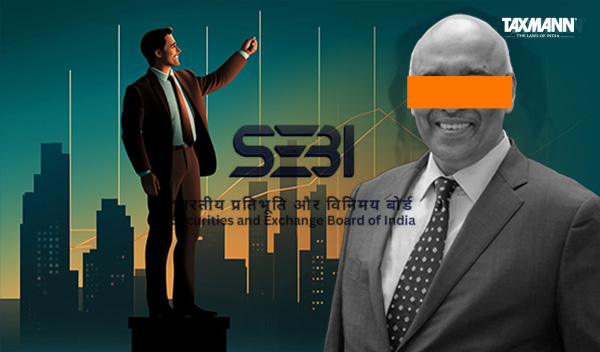
N. Venkatram Appointed Part-Time Member Of SEBI

Shri N. Venkatram SEBI Appointment

Notification No. S.O. 6100(E), Dated 30.12.2025

1. Introduction

The Central Government has appointed Shri N. Venkatram as a Part-Time Member of the Securities and Exchange Board of India (SEBI). The appointment reflects the Government’s continued efforts to strengthen the governance and expertise of the securities market regulator.

2. Details Of The Appointment

Shri N. Venkatram will serve as a Part-Time Member of SEBI for a term of three years from the date he assumes charge. The appointment is subject to the conditions specified by the Central Government, ensuring continuity and regulatory oversight within SEBI’s framework.

3. Professional Background

Shri N. Venkatram currently serves as the Country Chair for CDPQ India and CDPQ Global. He brings extensive experience in investment management, global finance, and institutional governance, which is expected to contribute meaningfully to SEBI’s regulatory and policy-making functions.

4. Tenure And Terms

The tenure of Shri N. Venkatram’s appointment will continue for three years, or until he attains the age of seventy years, or until further orders, whichever is earlier. These conditions align with statutory provisions governing appointments to SEBI’s Board.

5. Conclusion

The appointment of Shri N. Venkatram as a Part-Time Member of SEBI is expected to enhance the Board’s expertise and decision-making capabilities. His experience in global finance is likely to support SEBI’s mandate of ensuring orderly development and regulation of India’s securities markets.

Click Here To Read The Full Notification

The post N. Venkatram Appointed Part-Time Member Of SEBI appeared first on Taxmann Blog.

source

Categories
Blog Updates

Donations For Religious Events Not Taxable | ITAT

Donations Not Taxable As Business Income

Case Details: Krishna Janmashtmi Mahotsav Samiti vs. Income-tax Officer, Exemption [2025] 181 taxmann.com 879 (Delhi - Trib.)

Judiciary and Counsel Details

  • Anubhav Sharma, Judicial Member.
  • Manish Agarwal, Accountant Member.
  • Nitin Gulati, Adv. & Yashu Goel, CA for the Appellant.
  • Jitender Singh, CIT DR for the Respondent.

Facts of the Case

The assessee, Krishna Janmashtmi Mahotsav Samiti, a public charitable trust registered under section 12A and approved under section 80G, was engaged in organising religious and cultural activities, including Janmashtami Mahotsav, conducting religious discourses, arranging free meals (bhandaras), establishing ashrams, and constructing dharamshalas. For A.Y. 2014-15, the assessee filed a nil return claiming exemption under sections 11 and 12.

During assessment proceedings under section 143(3), the Assessing Officer noted that the assessee had received donations during the Janmashtami Mahotsav. Based on replies received from certain donors under section 133(6) stating that donations were given for publicity or advertisement, the Assessing Officer treated such receipts as business promotion or advertisement income and made an addition by denying exemption under section 11. The Commissioner (Appeals) upheld the addition.

On appeal, the Tribunal observed that the objects of the assessee-trust were purely religious and cultural and not covered under “advancement of any other object of general public utility”. It was further noted that the Revenue did not dispute that the donations were utilised for organising religious events, providing free meals, conducting discourses, and for the construction of religious infrastructure, all of which were in furtherance of the trust’s declared objects.

Tribunal Held

The Tribunal held that the mere display of donor names on banners, posters, or event sites was only an acknowledgement of their contributions and did not confer any commercial benefit on the donors. In the absence of any profit motive, such receipts could not be treated as business promotion or advertisement income.

Accordingly, the Tribunal held that the Assessing Officer was not justified in treating the donations as business promotion receipts and in denying exemption under sections 11 and 12. The addition was deleted, and the assessee’s appeal was allowed.

The post Donations For Religious Events Not Taxable | ITAT appeared first on Taxmann Blog.

source

Categories
Blog Updates

ICAI 2025 | Key Amendments And Guidance Notes

ICAI 2025 Amendments

1. Introduction

The year 2025 witnessed significant regulatory and standard-setting activity by the Institute of Chartered Accountants of India (ICAI), reflecting its continued commitment to strengthening the financial reporting, auditing and assurance. During the year, ICAI issued exposure drafts, implementation guides, manuals, and technical guidance, addressing evolving business practices, global developments in Ind AS/IFRS and auditing standards. Further, ICAI has also amended some of the Ind AS. Considering all the developments, we have prepared consolidated overview of the key amendments, exposure drafts, and technical publications issued by ICAI in 2025, highlighting their scope, objectives, and practical implications for professionals and stakeholders.

2. Amendments

2.1 MCA notifies Ind AS amendments 2025 with key updates on supplier finance, liability classification & Pillar Two taxes

The Companies (Indian Accounting Standards) Second Amendment Rules, 2025 introduce targeted amendments to several Ind AS with the objective of improving clarity, consistency, and alignment with recent IFRS developments. The key amendments and important aspects are summarised below:

(a) Ind AS 1 – Classification of Liabilities:

Detailed guidance has been introduced on classifying liabilities as current or non-current, particularly where loan covenants exist. The amendments clarify that classification depends on the entity’s right to defer settlement at the reporting date, not on management intention or events after the reporting period. Additional disclosure requirements have been introduced where compliance with covenants is required after the reporting date.

(b) Ind AS 7 and Ind AS 107 – Supplier Finance Arrangements:

New disclosure requirements have been introduced for supplier finance (or supply chain finance) arrangements. Entities are required to disclose information on terms, carrying amounts, payment ranges, and the impact of such arrangements on cash flows and liquidity risk.

(c) Ind AS 12 – Pillar Two Income Taxes:

Amendments introduce specific guidance on OECD Pillar Two minimum tax rules. Entities are prohibited from recognising deferred tax assets or liabilities related to Pillar Two taxes and are required to provide specific disclosures on current tax and exposure to such legislation.

Overall, the amendments focus on improving transparency, especially in relation to liability classification, supplier finance arrangements, and international tax reforms, and are effective mainly from 1st April 2025, with certain provisions applicable from 1st April 2026.

3. Exposure Drafts issued in the year 2025

3.1 Exposure draft of Ind AS 118: Presentation and Disclosure in Financial Statements

The Institute of Chartered Accountants of India (ICAI) has issued an exposure draft of Ind AS 118,Presentation and Disclosure in Financial Statements which deals with how information is presented and disclosed in financial statements. This draft is aligned with IFRS 18, issued by the International Accounting Standards Board (IASB) in April 2024.

IFRS 18 introduces a new and structured approach to presenting income and expenses by classifying them into five categories: operating, investing, financing, income taxes, and discontinued operations. It also prescribes new mandatory subtotals in the statement of profit or loss and enhances disclosure requirements, particularly in relation to management-defined performance measures.

Ind AS 118 is proposed to be applied in India for financial reporting periods beginning on or after 1st April 2027, consistent with the global effective date of IFRS 18, which applies from 1stJanuary 2027.

To understand the news in detail, Click here

3.2 Exposure draft on Ind AS 109 and Ind AS 107 for electricity contracts dependent on natural sources

ICAI has issued an exposure draft proposing amendments to Ind AS 109 and Ind AS 107 to clarify the accounting and disclosure requirements for contracts linked to nature-dependent electricity, such as solar and wind power. The amendments provide guidance on when such contracts fall within Ind AS 109, Financial Instruments and permit their use in hedge accounting for future electricity consumption.

The draft also enhances disclosure requirements under Ind AS 107, Financial Instruments: Disclosuresrequiring entities to explain the impact of these contracts on cash flows, unused electricity, and related risks. The proposed transition provisions allow limited retrospective application. Overall, the amendments aim to improve clarity, transparency, and risk management for renewable energy–linked electricity contracts.

To understand the news in detail, Click here

3.3 Exposure draft on amendment of Ind AS 21

Indian Accounting Standards (Ind AS) are substantially converged with the IFRS Standards issued by the International Accounting Standards Board (IASB). As IFRS Standards are issued or amended from time to time, the Accounting Standards Board (ASB) of the Institute of Chartered Accountants of India (ICAI) reviews these changes to assess the need for corresponding updates to Ind AS and to maintain alignment.

As part of this ongoing convergence process, the ASB has issued an Exposure Draft inviting public comments on the “Amendments to Ind AS 21, Translation to a Hyperinflationary Presentation Currency.

To understand the news in detail, Click here

3.4 Exposure draft of the manual on Concurrent Audit of Banks

The Internal Audit Standards Board of ICAI has issued an exposure draft of the “Manual on Concurrent Audit of Banks” to guide members in conducting consistent, high-quality, and effective concurrent audits. The draft explains the objectives, scope, and approach of concurrent audits and highlights their role in strengthening banks’ internal controls and risk management.

It provides practical guidance on audit planning, execution, documentation, and reporting, in line with RBI regulations and other applicable requirements. The manual also includes sector-specific guidance on key banking areas such as credit, deposits, treasury, advances, foreign exchange, and compliance with KYC and AML norms, while emphasizing auditor independence, professional judgment, and ethical conduct.

Click Here To Read The Full Story 

The post ICAI 2025 | Key Amendments And Guidance Notes appeared first on Taxmann Blog.

source